

A fitness equipment importer placed 800 home treadmills with a retail chain and saw motor failures in the fourth month. The specification said 3.0 horsepower, a genuinely strong figure on paper. What it did not say was that the figure was peak horsepower, measured at the instant the motor draws maximum current, and the continuous rating was closer to 1.25. The customers who bought it were running for forty minutes at ten kilometres an hour, and the motor was being asked to deliver more than double its continuous rating for most of every session. The warranty cost erased the margin on the entire container.
Peak Horsepower Versus Continuous Horsepower
The treadmill industry quotes two numbers and the difference between them is the single most useful thing a buyer can learn. Peak horsepower, sometimes called maximum or duty horsepower, is what the motor produces momentarily under heavy load. Continuous horsepower, or CHP, is what it can sustain indefinitely without overheating. On many consumer models the peak figure is roughly double the continuous figure, and a 3.0 HP peak unit is typically a 1.25 to 1.5 CHP machine.
This matters because the motor that matters to the customer is the continuous one. Ask every supplier to state CHP and peak separately, in writing, on the quotation. A factory that only quotes peak is not being evasive so much as following an industry habit, but the buyer who does not ask discovers the difference through warranty claims. Serious home models such as the 3.5HP home use professional running treadmill are specified so the continuous figure supports genuine running rather than occasional walking.

Duty Cycle: What the Machine Will Actually Do All Day
Duty cycle is the share of time a machine can run at load without exceeding its thermal limit, and it is the correct basis for choosing between home, light commercial and commercial classes. A home machine is typically rated for one to three hours a day, a light commercial unit for four to six hours, and a true commercial unit for continuous operation through a gym day. The mistake importers make is selling a home rated machine into a small hotel gym, a physiotherapy clinic or a corporate wellness room, where daily use quietly exceeds the design duty by a factor of three.
Segment your buy by duty, not by motor number. Walk the retail buyer through three questions: how many hours per day will the machine run, at what speed, and at what average user weight. A walking desk user at six kilometres an hour is a completely different load case from a runner at twelve. Match the duty class to the answers and the warranty claims follow the specification, not the other way round.
Motor Type, Controller and the Components Around Them
The motor does not fail alone; the system fails. Three companion items decide whether a treadmill survives its duty class. The motor controller, or drive board, is the most common failure point after the motor itself, and its current rating should exceed the motor’s continuous draw with margin. A controller sized exactly to the motor runs hot and fails early in warm climates. The drive belt and the roller diameter determine how much load the motor sees at a given belt speed, and a smaller front roller increases the torque requirement measurably.
The deck and belt are the consumer visible wear items. Ask for the deck thickness, normally 15 to 25 mm, the belt thickness and ply count, and whether the deck is waxed or pre lubricated. A thin deck under a heavy user flexes, and the flex loads the motor far more than the spec sheet suggests. For shock absorption claims, ask what the system actually is: elastomer cushions, spring assemblies or a floating deck, and how it behaves after a year. A model like the 4.0HP home treadmill with shock absorption should be quoted with the cushioning system described in component terms rather than in marketing language.

User Weight Rating and Frame Stability
Maximum user weight is the second most abused number in the category. It is a structural and thermal limit combined, and it interacts with speed: a machine rated for 120 kg walking will not necessarily support 120 kg running. Ask for the rating separately for walking and running if the supplier can provide it, and check the frame steel gauge and the upright tube section, because stability at speed is a frame question as much as a motor question.
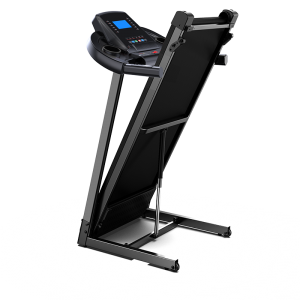
For markets where floor space is tight, folding mechanisms add a failure point. Check the gas strut or damper rating and whether the folding joint has a positive lock in both positions. A folding home running treadmill should be cycled several hundred times during evaluation, because the mechanism is used daily and rarely tested by the factory.
Wider running surfaces, such as the luxury wide home treadmill, appeal strongly to taller users and justify a higher price point without changing the motor class.
Entry models like the B5 4010 home running treadmill should be positioned honestly for walking and light jogging, and sold into that use case rather than into a runner’s home.
The Specification Sheet for Treadmill Importers
- Continuous horsepower and peak horsepower, stated separately and in writing.
- Duty class with the maximum recommended hours per day.
- Controller current rating and the margin above continuous motor draw.
- Roller diameter, deck thickness and belt specification.
- Maximum user weight for walking and for running, stated separately.
- Frame steel gauge and upright section, plus the folding mechanism cycle rating.
- Warranty terms on motor, controller and belt, and spare parts availability.
The Bottom Line
A treadmill is a thermal system sold as a piece of furniture. Buy the continuous rating, not the peak, match the duty class to the hours the machine will actually run, check the controller, deck and roller around the motor, and sell each model into the use case its duty cycle supports. Importers who do this stop paying for warranty motors in month four and they keep the retail account through the second and third season.
Related Pages
- How to Choose Treadmills for Corporate Wellness Programs
- How to Source Treadmills for Amazon FBA and Online Marketplaces
- Private Label Opportunities for Walking Pads and Compact Treadmills
Post time: Sep-24-2026