

A gym chain buyer in Germany calls your support line in March to report that twenty units purchased in December now show cracked weld joints at the upright base, even though every member who used them weighed less than the printed 120 kg maximum. This failure pattern repeats across importers because the 120 kg figure on the carton is a static load number measured with sandbags, not the dynamic load rating a running body actually produces.
How Is the Maximum Load Rating Actually Measured?
Most suppliers quote a static maximum user weight tested with fixed weights on a stationary deck, which tells an importer almost nothing about real running conditions.
A running human generates heel-strike impact forces equal to 2-3 times body weight on every stride.
So a 100 kg runner can load the frame and deck with 200-300 kg of peak force several times per second. The warehouse sandbag test never reproduces that rhythm.
The honest specification separates static load, dynamic load, and rated running load as three different numbers.
Importers who compare only the printed maximum will keep buying machines that pass the warehouse test and fail the gym floor within a single season.
Frame Steel Tube Wall Thickness and Welding Quality
The single biggest predictor of structural survival is the steel tube wall thickness around the uprights and the base. Thickness decides whether the frame returns to shape after each impact or bends for good.
A 1.5 mm wall tube bends permanently under repeated 250 kg impacts while a 2.5 mm wall tube holds its shape for years.
Welding quality matters as much as thickness because a thin weld bead is the first point of fatigue cracking under load. A beautiful paint job hides a weak joint until it fails.
Require full penetration welds at the upright-to-base joint and request a weld cross-section photo before mass production.
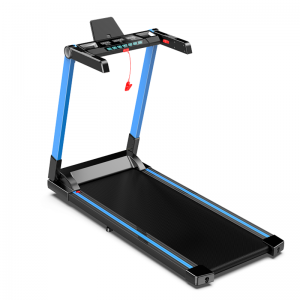
The DAPOW C3 450 free installation walking treadmills for retail buyers are built for lighter walking traffic where peak impact stays near 1.5 times body weight and the base joint still needs reinforcement.
Why Does a 120 kg Rating Collapse Under a 100 kg Runner?
The printed rating almost always assumes a static load, so the safety margin is consumed the moment a user starts running. The gap between the label and the reality is where the cracks appear.
A machine rated 120 kg static but only 90 kg dynamic will crack within three months when a 100 kg user runs daily.
That is the exact reason the German buyer above saw failures: the dynamic capacity sat below the user weight, and heavy runners compound the gap faster than any catalog expects.
Always ask suppliers for the dynamic running load, not just the static maximum, and print the lower number on the detail page.
Running Deck Thickness, Cushioning Pads and Roller Bearings
Deck thickness absorbs the repeated shock that would otherwise travel straight into the frame and the welds. A thin deck is the silent cause of most structural complaints.
Specify a 18 mm composite deck for home units and a 25 mm deck for commercial models carrying 120 kg plus users.
Cushioning pads under the deck reduce peak force by 15-25% when they sit in the heel-strike zone, which also protects the user’s knees.
Worn or missing pads transfer the full 2-3 times impact straight to the welded joints and accelerate cracking.
Roller diameter controls belt tracking stability and bearing temperature during long sessions. Small rollers spin faster and run hotter under the same load.
A 60 mm front roller beats a 42 mm roller because larger diameter spreads belt tension and runs cooler.
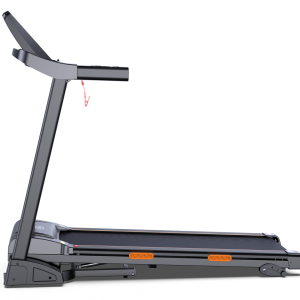
The DAPOW A7 smart music exercise treadmill for home use with Bluetooth pairs a 18 mm deck with elastomer cushions suited to 100 kg home runners who train several times each week.

Upright Stiffness and How Load Rating Matches Motor Power and Belt Size
Lateral stiffness stops the machine from swaying when a heavy user pushes off at speed or leans into a sprint. Side play at the top of the upright is an early warning sign of trouble.
A flexible upright with 30 mm side play at the top shakes the console loose and stresses the base weld within one season.
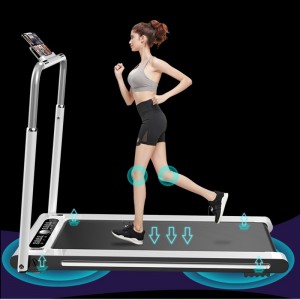
The DAPOW A2 90 upright wall walking Bluetooth intelligent treadmills for apartments use a wall-anchor design that removes lateral load from the frame entirely, suiting compact retail stock.
Load rating must also match motor continuous power and belt dimensions, because an underpowered drivetrain trips under the very users the frame claims to support.
Pair a 120 kg rated frame with at least a 2.0 HP continuous motor and a 500 mm wide belt to avoid overload trips.
The DAPOW A4 2023 big running belt treadmill machine for commercial gyms combines a wide 520 mm belt with a continuous duty motor sized for heavy daily traffic and a 130 kg running rating that matches the structure.
How Should Importers Set Load Ratings by Target Market Weight Distribution?
Start from the actual body-weight percentile of your destination market rather than a generic catalog number copied from a competitor.
For markets where the 95th percentile male weighs 100 kg, specify a dynamic rating of 125 kg to keep a 25 kg safety margin and protect the distributor from repeat failures.
The DAPOW A9 OEM fitness professional portable home treadmill for importers is configurable so distributors can set the printed rating to match each region’s weight distribution without retooling the whole production line.
Use this selection checklist before confirming any purchase order:
- Confirm the dynamic running load, not only the static maximum, for every SKU you import.
- Match steel tube wall thickness to your market’s 95th percentile weight plus a 20% impact buffer.
- Reject any unit whose deck is thinner than 18 mm for home or 25 mm for commercial service.
- Verify roller diameter is 60 mm or above to protect bearings under heavy continuous use.
- Align motor continuous horsepower and belt width with the chosen load rating before signing.
Detail Page Labeling Specification for Honest Capacity Claims
Your product page should show three numbers, not one, so professional buyers can trust the claim and defend it to their own customers.
Print static load, dynamic running load, and recommended user weight as separate lines on every listing.
Hiding the lower dynamic number behind a 120 kg headline is the fastest route to a warehouse full of warranty claims and a damaged distributor relationship.
Add a one-line note that the dynamic load already includes the 2-3 times heel-strike impact factor so buyers understand the safety built into the number.
Include the deck thickness, tube wall, and roller size next to the rating so buyers can verify the structure before they place the order.
Use the exact phrase tested dynamic running load so comparison shoppers find a consistent standard across your catalog.
Conclusion
A 120 kg label means nothing if it describes a static sandbag test while your customers run with 2-3 times that force on the deck. The rating on the box has to match the load on the floor.
Importers who publish dynamic load, specify 18-25 mm decks, and match motor and belt to weight distribution will cut structural returns sharply.
Continue shipping static-only ratings and the three-month crack calls will keep arriving every season.
Related Pages
- How to Choose Treadmills for Corporate Wellness Programs
- How to Source Treadmills for Amazon FBA and Online Marketplaces
- Private Label Opportunities for Walking Pads and Compact Treadmills
Post time: Nov-02-2026