

Importing treadmills for resale looks like a straightforward container play until a customs officer asks for the right certificate and your shipment sits on the dock. For distributors, wholesalers and private-label sellers, the real buying decision is not the unit price – it is whether the factory can clear your market, fill a container sensibly, and stand behind the product when a motor fails six months later.
Certifications Are the Difference Between Sold and Seized
DAPOW has passed CE, PSE and UKCA certifications, which cover the three big destination groups: the European Economic Area, the Japanese market, and post-Brexit Britain. If you sell into the EU, CE is not optional; if you sell into Japan, PSE is the gate. A factory that already holds these marks saves you the months and thousands of dollars of testing a non-certified supplier would push onto you. With brand dealers in more than 30 countries, the factory is used to the paperwork different regions demand.
Voltage and Plug Are Market-Specific Details
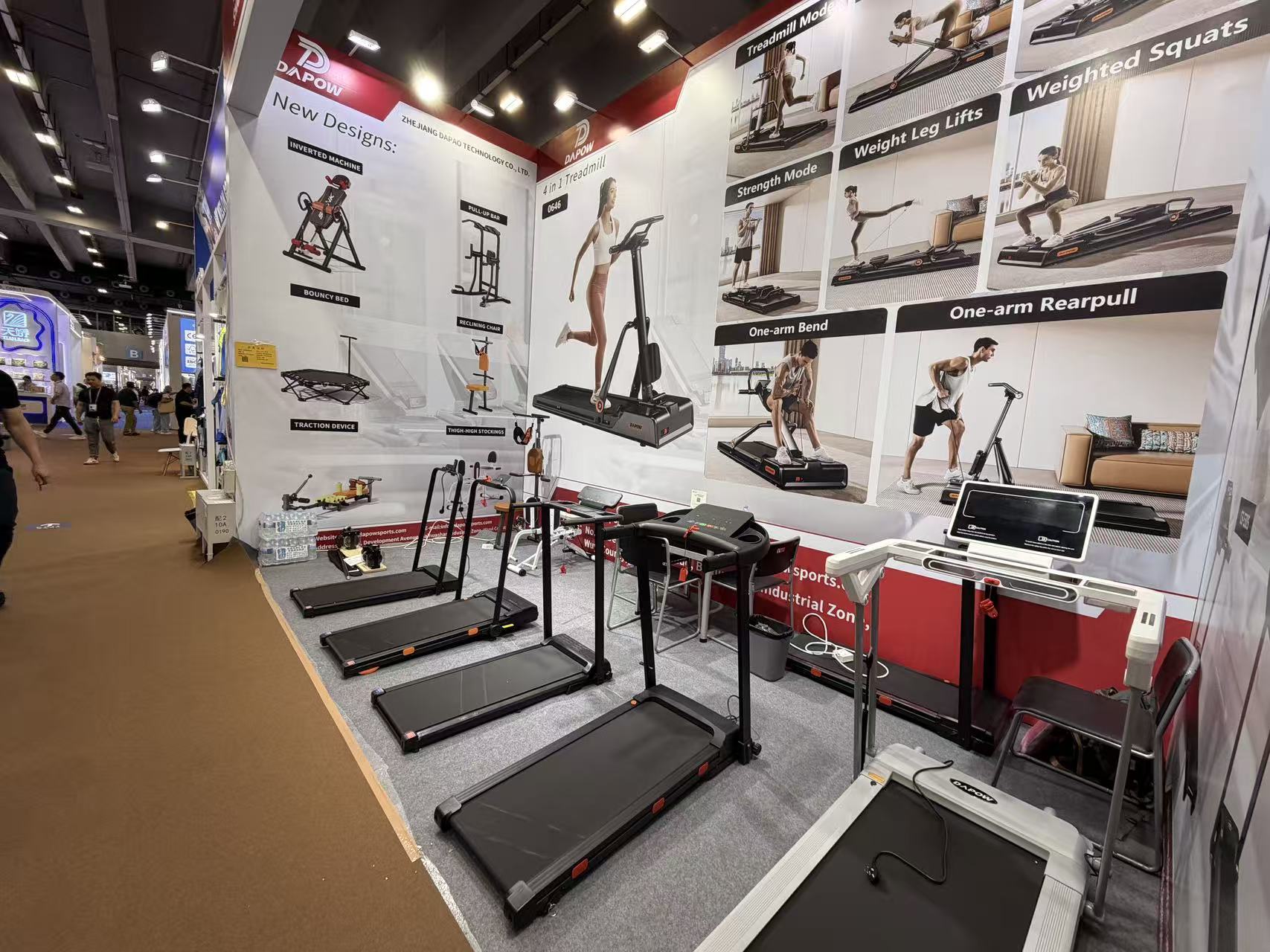
A treadmill built for 220-240V will not serve a North American buyer without a 110-120V version, and the plug mold differs by region. DAPOW builds to both voltage bands, so you can mix or separate them by destination. The 4-in-1 home model DAPAO 0646 runs on a DC 2.0HP motor, folds flat under a bed, and covers rowing, running, abdominal and strength modes in one unit, which you can review here. For a distributor, a space-saving 4-in-1 is an easy shelf item because it fits apartments and small homes that a full treadmill will not.
OEM and ODM Open the Private-Label Margin
The factory accepts both OEM and ODM service, which means you can put your own brand on a standard model or co-develop a variant. Private label is where distributor margin jumps from a thin resale spread to a real brand equation, because your customers are loyal to your name, not the factory’s. The light-commercial DAPAO 152, with a DC 3.5HP motor, 0-18% auto incline and a 520x1280mm belt, is a strong private-label candidate for home-gym and studio buyers, detailed here.
Container Math Drives Your Real Margin
Treadmills are bulky, so container loading quantity is the number that decides landed cost. The DAPAO 0646 loads 64 pieces in a 20GP, 168 in a 40GP and 189 in a 40HQ. The commercial 158 model, with a 58cm belt and a 21.5-inch touchscreen, is shown here, and the luxury wide 0748 with a 48x130cm belt and under-45dB motor is at here. The C5-520, a 52cm luxury platform with 20km/h top speed, 150kg capacity and hydraulic folding, is detailed here. Knowing these load counts lets you plan a mixed container that hits both the weight and volume sweet spot.
Warranty and Spare Parts Keep Accounts Alive
A treadmill is a durable good with a motor, belt and controller that eventually need service. Distributors should confirm the spare-parts supply and warranty terms before launch, because a buyer whose belt tears at month eight will remember whether you shipped a replacement fast. Factories with an international R&D team and documented QC are more likely to keep parts available across a model’s life than a trader who relabels someone else’s unit.
- Match the certificate to the destination - CE for Europe, PSE for Japan, UKCA for Britain – before you quote.
- Confirm voltage and plug per country so returns do not eat the margin.
- Plan the container mix using published load counts to lower landed cost per unit.
Build the Range, Not a Single SKU
The strongest treadmill distributors carry a ladder: a compact 4-in-1 for apartments, a mid home treadmill, a light-commercial unit for studios, and a full commercial machine for gyms. That ladder lets a single buyer outfit a whole catalog and lets you move inventory between channels as demand shifts. With OEM, ODM, certification and container-load data all on the table, treadmills become a repeat-order fitness category rather than a one-container experiment.
After-Sales Documentation Distributors Should Request
Beyond the warranty itself, ask the factory for the supporting documents that make claims real: the test report behind each certificate, the spare-parts price list, and a simple fault-finding guide you can hand to your own support team. DAPOW’s international R&D background means these documents usually exist; the distributors who grow are the ones who localize them into their own language and put them in front of the customer before something breaks. That preparation is what turns a one-time treadmill sale into a service relationship with recurring accessory and belt revenue.
For importers, the practical checklist is short: the right certificate for the market, the right voltage for the plug, a container plan that works, and a factory that answers on warranty. Get those four right and the unit price takes care of itself.
Related Pages
- News – How to Choose Fitness Equipment for TV Shopping and Direct Response Channels
- News – DAPOW Launches 2238S-407: Home Treadmill with 15-Level Auto Incline for Walk-to-Run Training
- News – DAPOW Exhibits at the 140th Canton Fair 2026 (Phase 3): Treadmills & Inversion Tables at Booth 13.1 H41-42
- News – DAPOW Launches the B1-400-1 Home Treadmill with Extra-Wide 400 mm Belt and Quiet DC Motor
- News – DAPOW Launches 2438-402A: A 2-in-1 Treadmill with Vibrating Plate for Two-Person Home Workouts
Post time: Sep-08-2026