

Two Samples, Identical Spec Sheets, Completely Different Machines
A fitness importer evaluating two home treadmill factories received samples with almost identical specification sheets: same motor power, same belt size, same maximum speed, same programme count. On paper they were the same machine. In the warehouse they were not. One ran smoothly and quietly at eight kilometres per hour, the other transmitted a shake through the console at six and made a rhythmic thump that no specification had mentioned. The importer ordered from the first factory and has never had a serious return problem, but only because somebody ran the samples instead of reading the sheets. Most importers read the sheets.
A treadmill is one of the few products where the purchase decision is made almost entirely by the body and not by the specification, and yet it is one of the most commonly bought on paper. The returns that damage a treadmill programme are rarely electrical failures. They are ride quality complaints: noise, shake, belt slip, and a deck that feels hard underfoot, and every one of those can be detected on a sample in thirty minutes before a single container is ordered. Here is the test protocol.
Run the Speed Sweep and Listen for the Thump
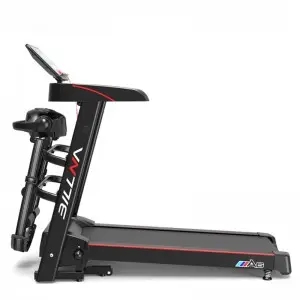
Start the machine empty and take it up through the speed range slowly, in two kilometre per hour steps, stopping at each step. Listen for a periodic thump or a whirring that rises with speed rather than with load, because that is almost always a roller issue: an out-of-round roller, a poorly crowned roller, or a bearing that is carrying load unevenly. A once-per-revolution thump is a roller defect and a higher frequency buzz is usually a motor or drive belt issue, and the two have completely different remedies, so identify which one you are hearing before you raise it with the factory. Put a hand on the console at each speed step and note where the shaking starts. Vibration that appears at walking speed rather than running speed is the worst finding, because walking is where a home machine spends most of its hours. A model positioned as a quiet home running machine, such as the DAPOW B6 2.5HP home luxury fitness treadmill, should stay calm right through the middle of its speed range, not only at the top.
Check Incline Accuracy With a Phone, Not With the Display
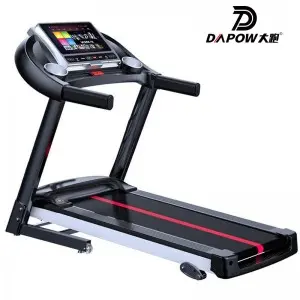
Incline is the feature most often overstated on a specification sheet and least often checked. Raise the machine to each incline step, place a phone with an inclinometer application on the belt at the centre of the running surface, and record the measured angle. Compare measured against displayed at three points: minimum, mid and maximum, and note the time taken to travel between them, because a slow incline motor is a genuine user complaint that never appears on a spec sheet. Also check whether the incline returns to zero on shutdown, because a machine left at maximum incline when it is switched off will start at maximum incline next time, which is a startle hazard and a common one-star review. An auto-incline model such as the DAPAO B1 4010S auto electric incline treadmill should be tested across its full incline travel, not just at the two extremes.
Deck Cushioning: Walk, Then Run, Then Walk Again
The deck is the part the customer feels and never sees. Run three passes on the sample: a brisk walk in soft shoes, a run in trainers, and a walk barefoot, and pay attention to the landing under the ball of the foot. A deck that is too soft feels unstable and produces complaints about the machine moving underfoot, while a deck that is too hard generates joint discomfort complaints within the first month, and both are far more common than any mechanical defect. Check for a dead spot: a region of the deck where the cushioning is noticeably firmer, usually at the front where the motor housing stiffens the structure. Look under the deck as well, at the number and position of the elastomer mounts, because that is what the supplier can actually change if the feel is wrong. A walking-oriented incline machine such as the DAPOW B4 4010 walking incline treadmill should be judged at walking speed, where its users spend all their time, rather than at the maximum speed it can reach for ten seconds.
Belt Behaviour Under Load Is the Test That Predicts Returns
Run the belt test with a person on the machine, not empty. Have a tester of at least eighty kilograms walk at a steady pace and watch the belt for lateral drift over five minutes, then repeat at running speed. A belt that drifts only when loaded indicates a deck or roller alignment issue that will appear in customers’ homes within weeks, and the fix in the field is a customer service call that costs more than the margin on the unit. Check the belt stop behaviour too: bring the machine to an emergency stop from running speed twice and confirm that the belt does not jump or shift. A professional-grade home machine such as the professional China treadmill for home fitness should hold its tracking under load at both walking and running speed without adjustment out of the crate.
Measure Noise the Way a Neighbour Would
Specification sheets quote motor noise, which is not the noise a customer hears. Measure at three positions: at the console, one metre from the machine at deck height, and outside the room with the door closed, using a phone application at walking and running speed. The dominant noise in a home machine is usually impact, transmitted through the frame into the floor, and it is reduced by the deck mounting and the foot design rather than by the motor. If the impact noise is high, no motor change will fix it, and putting the machine on a mat only moves the complaint from the user to the neighbour downstairs. Test on a hard floor rather than carpet, because carpet hides exactly the problem that generates the complaint.
Write the Findings Into the Order Specification
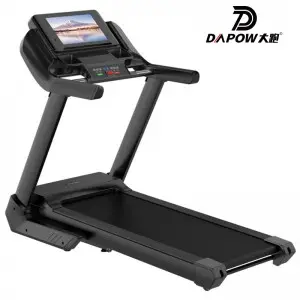
The point of the protocol is to turn feelings into clauses. Record the six numbers: speed at which vibration starts, measured versus displayed incline at three steps, incline travel time, drift over five minutes loaded, noise at one metre, and the deck mount count, and put them on the purchase order as acceptance criteria with a defined tolerance. Suppliers respond well to numbers and poorly to adjectives, and a factory that knows the vibration threshold is specified will check it before shipment. A premium running model such as the DAPOW B5 treadmill for the ultimate running experience should be held to tighter figures than a walking machine, because that is the promise being sold.
Related Pages
- How to Choose Treadmills for Corporate Wellness Programs
- How to Source Treadmills for Amazon FBA and Online Marketplaces
- Private Label Opportunities for Walking Pads and Compact Treadmills
Post time: Oct-10-2026