

For gym operators, hotel purchasing managers, and rehabilitation center directors, one striking feature stands out when selecting commercial treadmills: their substantial weight. A high-end commercial treadmill typically weighs several times more than a residential model. This is no accident — it is a necessary outcome of professional engineering design. There is a direct causal link between weight and stability, and stability is the lifeline of commercial equipment in high-intensity, long-hour operating environments.
The Physical Basis of Stability: Mass and Inertia
From a physics perspective, an object’s mass (often referred to as weight in daily use) determines its inertia — its ability to resist changes in motion. When an athlete runs at high speed on a treadmill, every foot strike delivers powerful impact force to the running belt and frame.
Resisting Shaking and Movement
A heavier frame means greater inertia, which more effectively absorbs and counteracts repeated impact forces, preventing the machine from shaking or shifting. A lightweight treadmill may develop uncomfortable wobble during high-speed running, which not only harms user experience but also creates safety hazards.
Delivering a Solid Running Surface
Stability directly translates to user foot feel. A stable treadmill provides a firm, reliable platform, allowing athletes to focus on training instead of balancing their body. This is especially critical for users performing high-intensity interval training (HIIT) or speed-focused workouts.
What Contributes to Weight: The “Inner Strength” of Commercial Treadmills
The weight of a commercial treadmill does not come from a single component, but from a full set of heavy-duty parts that together form a rugged, long-lasting system.
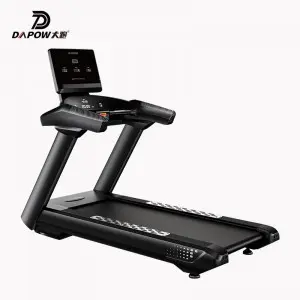
Heavy-Duty Steel Main Frame
This is the primary source of weight. Commercial treadmills use thicker, high-strength welded steel to ensure the frame does not deform or suffer fatigue failure even under hundreds of pounds of dynamic load. This robust structure forms the foundation for long-term stable performance.
High-Power AC Motor
Commercial treadmills almost exclusively use AC motors, unlike the DC motors common in residential machines. AC motors are larger and heavier, but offer decisive advantages: consistent, sustained high power, support for 10+ hours of daily continuous operation, and tolerance for frequent starts, stops, and speed changes across users of varying body weights.
Thickened Running Deck and Multi-Layer Running Belt
To absorb impact and protect user joints, commercial treadmill decks are significantly thicker and feature multi-layer composite construction. The running belt is also heavier and more wear-resistant to withstand tens of thousands of friction cycles. Both components add considerable overall weight.
Widened Rollers
Commercial treadmills use larger-diameter front and rear rollers. While heavier, they effectively reduce motor load, lower running belt operating temperature, and extend the service life of both the belt and motor.
Purchasing Strategy: Why Invest in “Weight”?
For procurement decision-makers, understanding the value behind weight is essential. Choosing a heavier commercial treadmill means investing in:
Superior User Experience and Safety
A stable chassis supports high-level training, reduces injury risks, and improves member satisfaction.
Lower Maintenance Costs and Less Downtime
Heavy-duty components mean slower wear and fewer breakdowns. In commercial settings, equipment downtime directly equals lost revenue. A reliable treadmill saves substantial repair costs and reduces potential member attrition.
Longer Service Life and Higher ROI
A commercial treadmill is a long-term asset. Its rugged structure and durable parts ensure years of continuous use, spreading upfront costs and delivering a higher return on investment.
Conclusion
In short, the “heaviness” of a commercial treadmill is an outward sign of its professionalism, durability, and safety. It is not a disadvantage but a key performance indicator. When evaluating different commercial treadmill models, decision-makers should not focus only on horsepower or speed, but prioritize weight and structural rigidity as core criteria.
While the upfront investment may seem higher, it delivers exceptional stability, reliability, and long service life — ultimately generating strong returns for your commercial fitness operation.
#CommercialTreadmill #TreadmillStability #FitnessEquipmentProcurement #GymEquipment #HeavyDutyTreadmill #TreadmillFrame #ACMotor #Durability #ReturnOnInvestment #FitnessMachinery
Post time: Jun-26-2026