

Max User Weight shown on the treadmill nameplate is often misunderstood by end consumers as a simple static load-bearing figure. In reality, this parameter is a dynamic load limit comprehensively calculated by manufacturers based on the bending strength of the treadmill frame, deflection limit of the running deck, continuous torque of the drive system, and energy absorption capacity of the shock absorption system, with engineering safety factors applied.
Understanding the structural mechanics behind treadmill maximum load capacity helps distributors, gym buyers, and wholesale purchasers make more accurate product selection decisions, avoiding deck cracking, frame deformation, motor overheating, or warranty invalidation caused by overloading.
Essential Difference Between Static Load-Bearing and Dynamic Impact Load
The rated maximum user weight of a treadmill is usually determined by static or quasi-static tests — placing equivalent weights at the center of the running deck and measuring elastic deformation of the frame and deck.
However, when a person runs on the treadmill, the vertical Ground Reaction Force (GRF) at foot strike can reach 2 to 3 times body weight. During short sprints or downhill running, it can even reach 3 to 4 times body weight.
Therefore, a household treadmill rated for 120–130 kg must be structurally designed to withstand periodic impact loads as high as 240–360 kg during actual use.
When defining maximum user weight, manufacturers generally apply a safety factor of 1.2 to 1.5, and conduct more than 100,000 cycles of fatigue testing in accordance with standards such as EN 957-6 (European stationary fitness equipment — safety requirements for treadmills) or ISO 20957-6.
This ensures that under rated user weight, deck deflection remains within allowable limits (typically 3–5 mm of midpoint sag), and no fatigue cracks appear in welds or fasteners.
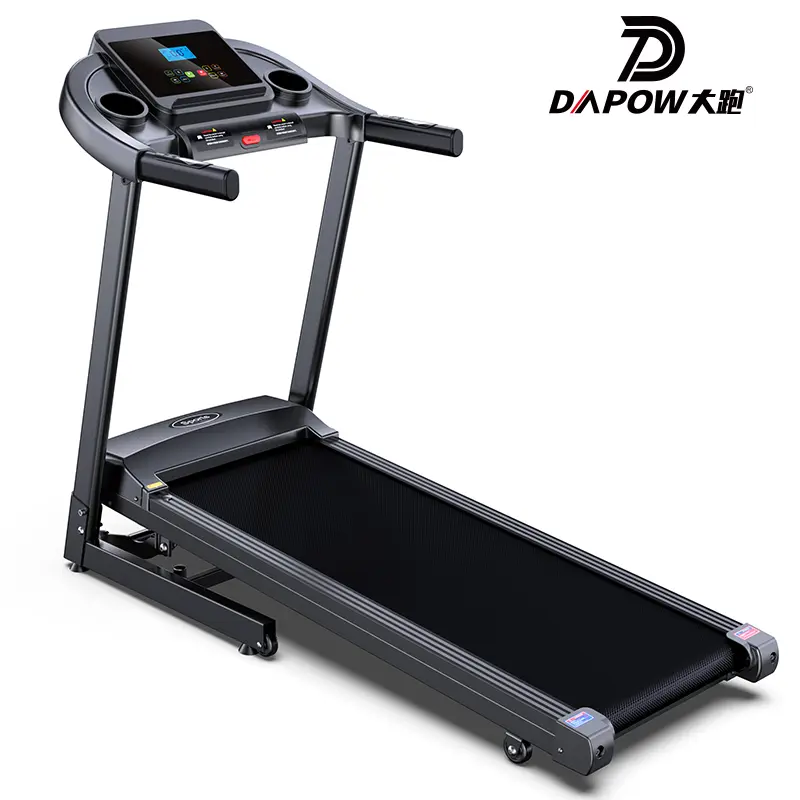
Four Key Structural Mechanics Factors Determining Maximum User Weight
1. Steel Specification and Welded Structure of the Treadmill Frame
The treadmill base frame and uprights are mostly welded from Q235 carbon structural steel rectangular or square tubes. The frame defines overall bending and torsional rigidity:
- Household models: tube wall thickness 1.5–2.0 mm, rated max load 100–130 kg
- Mid-to-high-end household / light-commercial models: wall thickness over 2.5 mm, with added transverse ribs or truss supports, max load up to 150 kg
- Commercial treadmills: heavy-duty steel tubes 3.0–4.0 mm thick, with robotic welding and overall aging treatment, max load exceeding 180–220 kg
Insufficient frame rigidity causes lateral shaking under heavy users, leading to loose bolts and cracked welds over time, effectively reducing safe load capacity.
2. Running Deck Thickness, Material and Span Support
The running deck directly bears impact loads, usually made of multilayer phenolic resin-impregnated high-density fiberboard, with thickness ranging from 15–25 mm.
Supported by front and rear rollers, the deck forms a simply supported or continuous beam structure: the larger the span and the thinner the board, the greater the midspan deflection under load.
Premium household decks are at least 18 mm thick; commercial models typically use 20–25 mm reinforced decks with longitudinal bottom ribs to reduce bending deformation.
Excessive deck deflection impairs running feel, causes uneven belt tension and tracking issues, and accelerates bearing wear. Thus, bending stiffness (EI value, modulus of elasticity × section moment of inertia) is a core mechanical indicator limiting maximum user weight.
3. Continuous Horsepower (CHP), Starting Torque and Belt Drive System
Motor power does not directly “support” user weight, but the increased friction and drag torque from heavier users require sufficient Continuous Horsepower (CHP) and starting torque to maintain consistent speed.
A treadmill rated above 120 kg paired with a DC motor below 1.5 CHP will suffer speed fluctuations, slippage, or overheating shutdowns during high-speed heavy use, indirectly limiting actual usable load capacity.
Industry reference values:
- 1.5 CHP ≈ suitable for max user weight 90–100 kg
- 2.0–2.5 CHP ≈ 110–120 kg
- 3.0 CHP and above ≈ ideal for light-commercial / commercial models rated over 150 kg
4. Shock Absorption System and Roller Shaft Strength
Silicone cushions, springs, or airbags under the running deck not only protect joints but also distribute dynamic impact to the base frame.
Heavy users require 6–8 or more shock absorption points with matched compression stroke and stiffness. Otherwise, impact energy transfers directly to the deck and frame, accelerating fatigue damage.
Front and rear roller shafts are usually chrome-plated high-strength steel, with diameters ranging from φ46 mm (1.8 in) to φ63.5 mm (2.5 in). Larger shaft diameter means stronger bending resistance and less belt misalignment under heavy load — a key distinction between high-load commercial machines and entry-level home treadmills.
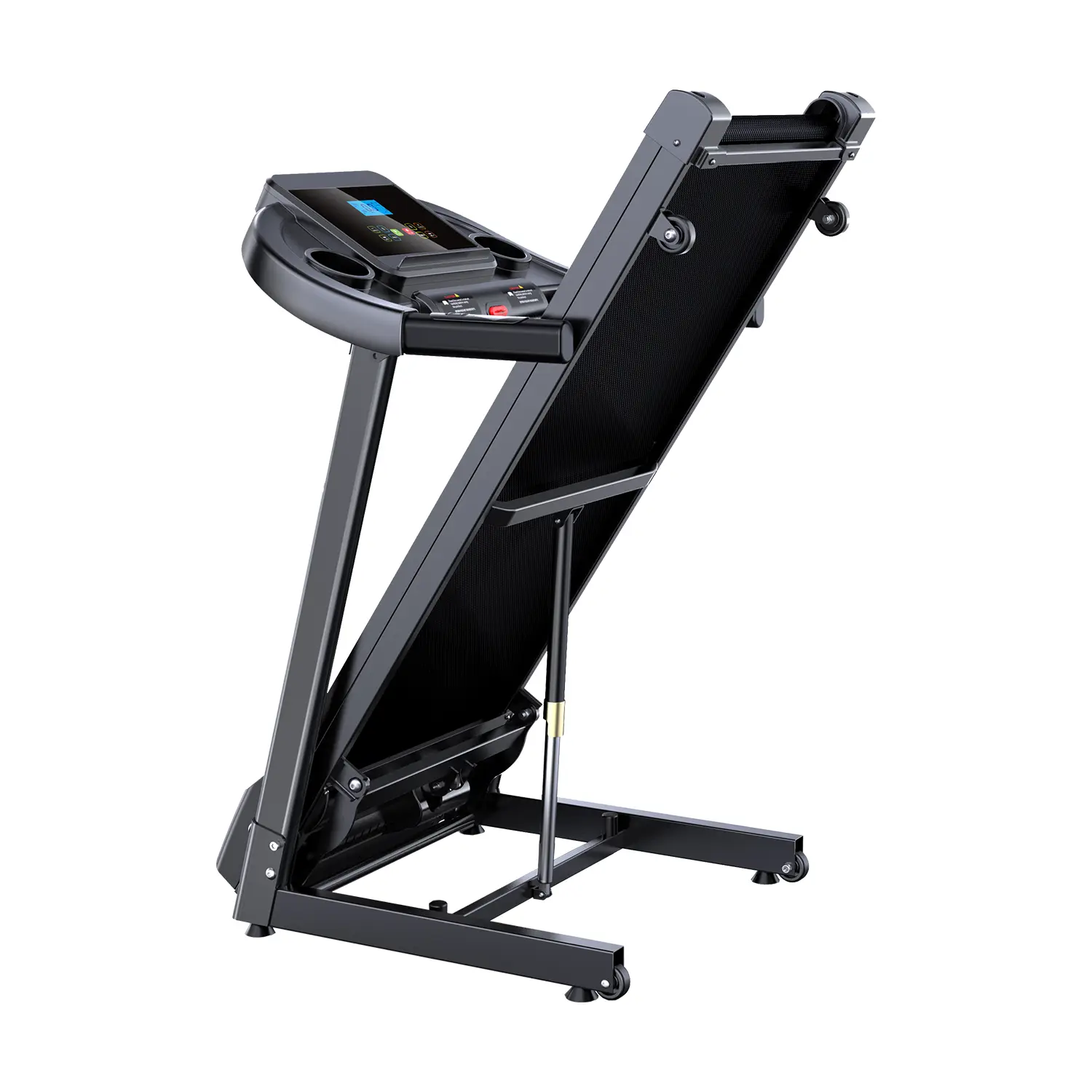
How to Correctly Interpret and Select Treadmills by Suitable Maximum Load Capacity
-
By user group:
- Light home use (≤70 kg): choose 100–120 kg rated models
- Standard family multi-user: recommend ≥130–150 kg with CHP ≥2.0
- Gyms or heavy users: select commercial-grade models ≥150–180 kg, CHP ≥3.0, frame wall thickness ≥2.5 mm
-
Reserve safety margin:
Select a treadmill with rated max user weight at least 15–20% higher than the heaviest actual user to offset dynamic impact and extend service life.
-
Distinguish Peak HP from Continuous Horsepower (CHP):
Models only listing Peak HP without CHP often have real load capacity lower than rated. Require suppliers to provide CHP data and dynamic load test reports during procurement negotiations.
-
Note differences in walking pads / foldable treadmills:
Compact walking pads have minimal frames and lack standard deck support, so rated max weight is usually lower (90–110 kg). They are not suitable for jogging or heavy users, and applicable scenarios must be clearly marked.
Conclusion
The treadmill maximum user weight limit is not an arbitrary marketing number, but an engineering parameter determined by frame bending stiffness, deck section moment of inertia and deflection control, motor continuous torque matching, and shock absorption energy absorption design, verified by cyclic fatigue testing with specified safety factors.
Buyers should comprehensively review steel tube thickness, running deck thickness, CHP value, and dynamic load test reports — rather than only comparing nameplate figures — to match real market demand and reduce after-sales risks.
#TreadmillMaxUserWeight #TreadmillStructuralMechanics #FitnessEquipmentProcurement #GymEquipmentWholesale #TreadmillLoadCapacity #CHPTreadmill #CommercialTreadmill #HomeTreadmill #FitnessEquipmentStandards #TreadmillBuyingGuide
Post time: Jul-02-2026