

For fitness equipment retailers, distributors and gym equipment buyers, precise product line positioning is critical to business success. Within the core category of treadmills, home treadmills and light commercial treadmills often confuse both consumers and purchasers. Although they appear similar, they differ significantly in design, performance, durability and target markets.
This article breaks down the core differences between these two treadmill types and helps you make smarter procurement decisions from a retail strategy perspective, maximizing your market share and profit margins.
Core Difference: Design Purpose & Target Users
To understand the distinction between these treadmills, you must first clarify their original design intent.
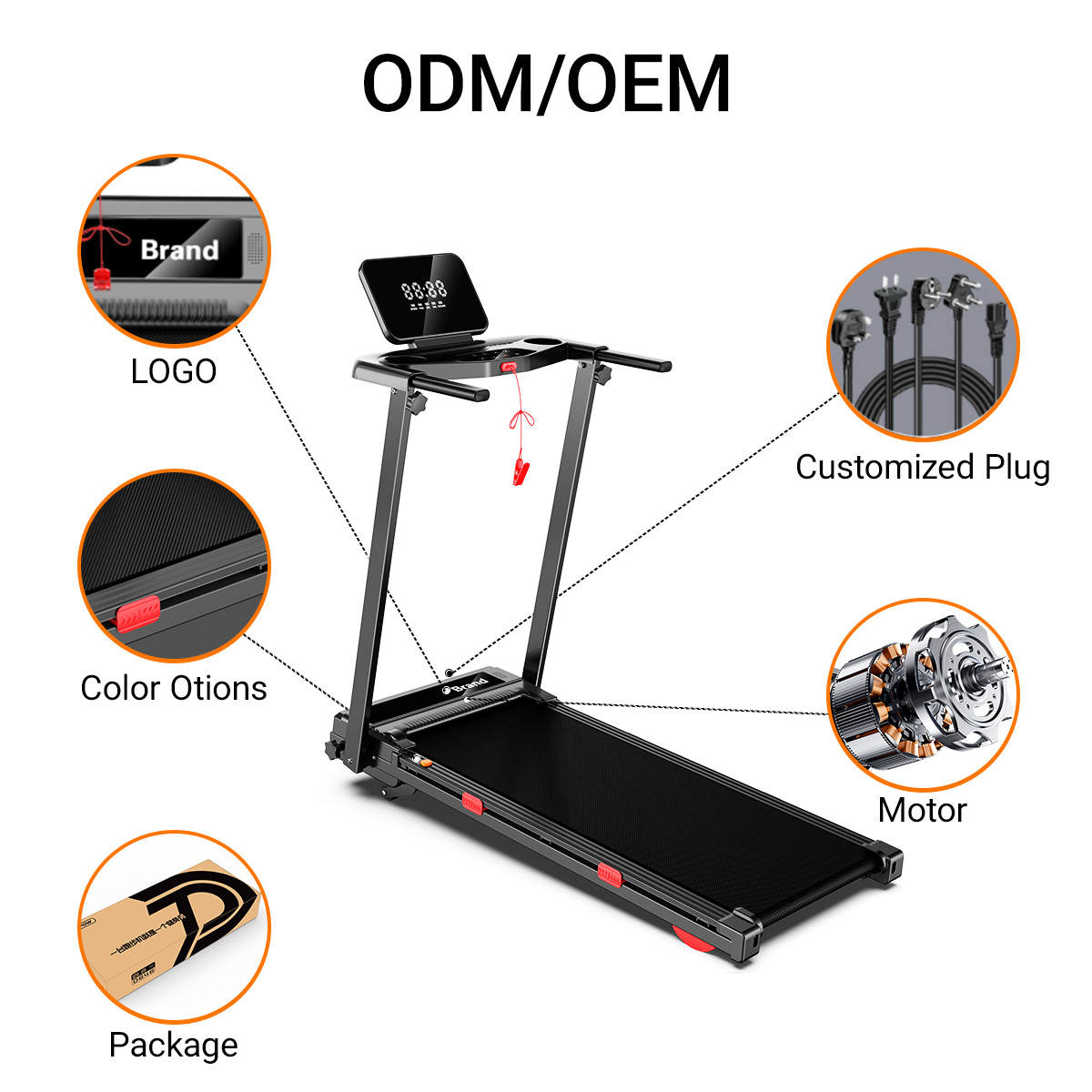
As the name suggests, it is designed to meet daily fitness needs for family members. It prioritizes cost-effectiveness, space-saving design, quiet operation and user-friendliness.
Target users include fitness beginners, household users, and individuals performing regular aerobic exercise.
Light Commercial Treadmill
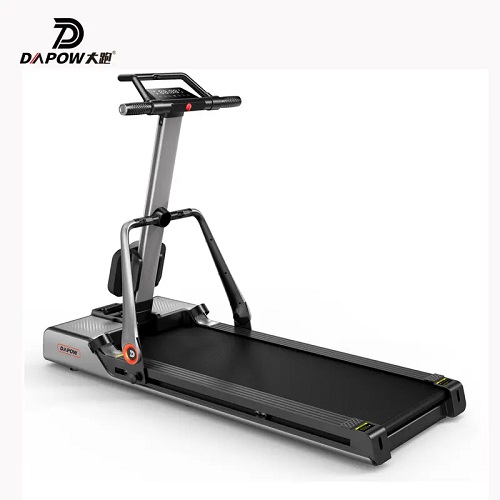
This is an entry-level commercial-grade machine built for high-intensity, long-hour usage environments. Commonly found in premium residences, hotels, corporate gyms, apartment clubhouses and small boutique fitness studios.
Target users are people with higher workout frequency and greater exercise intensity.
In-Depth Comparison: 4 Key Dimensions
For more accurate decision-making, we compare the two categories across four essential dimensions:
1. Motor & Performance
The motor is the heart of a treadmill and directly defines its performance limits.
Home Treadmill
- Typically equipped with a 2.0–3.0 CHP (Continuous Horsepower) motor
- Sufficient for walking, jogging and interval running
- Speed range generally 0.6–12 mph
- Incline range relatively limited, usually 0–12%
Light Commercial Treadmill
- Powered by a stronger motor, usually above 3.0 CHP
- Ensures stable, reliable performance under prolonged, high-load operation
- Wider speed range (12 mph+ on many models)
- Stronger incline adjustment, with some supporting up to 15% electric incline for professional training
2. Frame & Durability
Frame construction determines stability and service life.
Home Treadmill
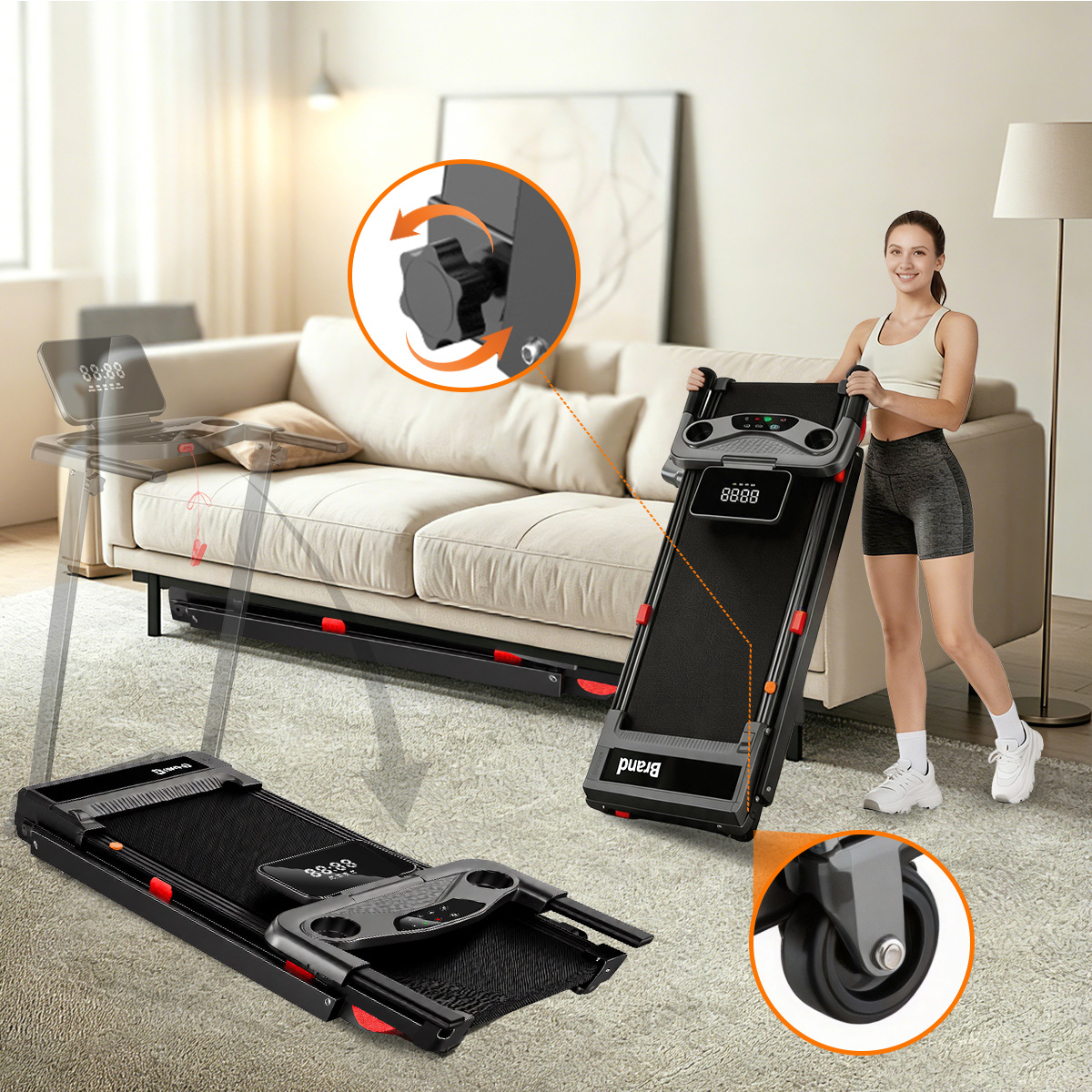
- Lightweight frame for easy movement and storage
- Most models foldable to save home space
- Running belt width typically 18–20 inches, suitable for most home users
Light Commercial Treadmill
- Heavy-duty, robust steel frame to withstand hours of daily continuous use
- Emphasizes stability and minimizes shaking
- Wider and longer running belt (20–22 inches) for greater movement space
- More professional shock absorption system to protect joints and extend equipment life
3. Features & Technology
Functional design aligns with usage scenarios.
Home Treadmill
- Focused on home entertainment and convenience
- LED or LCD displays showing time, speed, distance, calories and other basic metrics
- High-end models include Bluetooth, audio systems and basic interactive training programs
- Simpler, more durable console with large, easy-to-operate buttons
- Emphasizes diverse, professional training programs: interval training, heart rate control and more
- Better compatibility with gym management systems and professional fitness apps
4. Price & ROI
Pricing structure and return on investment differ significantly for retailers.
Home Treadmill
- Wide price range from entry-level to premium
- Offers retailers flexible options covering households with different spending power
- Relatively stable profit margins; sales volume is the key driver
Light Commercial Treadmill
- Higher unit price, supported by larger budgets from corporate, hotel and institutional buyers
- Delivers higher per-order profit
- Enhances retailer professionalism and attracts quality-focused B2B clients
Retail Strategy Recommendations: How to Choose?
Your selection should be based on your target market and customer profile.
Focus on Mass Consumer Market
If your core customers are value-seeking home users, make home treadmills your flagship product. Offer a range from basic walkers to full-featured smart treadmills to cover diverse needs.
Expand into B2B or High-End Markets
If you aim to partner with hotels, corporations, luxury apartments or small fitness studios, light commercial treadmills are essential. They meet strict requirements for durability and professionalism.
Build a Full Product Portfolio
The optimal strategy is to carry both.
- Use home treadmills to drive traffic and ensure steady cash flow
- Use light commercial treadmills to elevate brand image and capture higher profits
You can also position light commercial models as “professional home fitness” options for consumers seeking premium experiences.
Conclusion
Home treadmills and light commercial treadmills are not simply superior or inferior — they serve different positioning.
A successful retail strategy relies on accurately identifying your target customers and providing them with the most suitable products.
By clearly understanding their differences, you can optimize your product mix, stand out in the competitive fitness equipment market, and achieve sustainable business growth.
#hometreadmill #lightcommercialtreadmill #treadmillprocurementstrategy #fitnessequipmentretail #commercialtreadmill #homefitnessequipment #treadmillcomparison #gymequipmentpurchase #treadmilldistributor #fitnessequipmentmarketanalysis
Post time: Jul-14-2026