

For European sports goods wholesalers, inversion tables have long been a steadily growing product category. In recent years, a new type of inversion table equipped with support straps for sports protection has become a market highlight. By providing extra stabilization and cushioning for the waist or knees, this design significantly improves user safety and comfort during inversion.
However, when sourcing such products for buyers across different European countries, offering only one universal model is rarely sufficient to meet market demand. Premium fitness clubs, physiotherapy centers, and mass-market sports retailers differ fundamentally in their focus areas, quality requirements, and procurement budgets. Clarifying the segmented needs of the premium and mass markets is critical for wholesalers to optimize inventory and accurately match end consumers.
I. Two Major Driving Scenarios in the European Inversion Table Market
In Europe, demand for inversion tables mainly comes from two distinct usage scenarios:
Rehabilitation & Medical Prevention
In Germany, France, the Netherlands, and other countries, back pain is one of the leading causes of sick leave. Many physiotherapists and orthopedic doctors recommend inversion tables to patients as home rehabilitation devices to relieve intervertebral disc pressure through traction. This scenario demands medical-grade safety and highly adjustable support systems.
Home Fitness & Daily Wellness
In markets such as the UK, Italy, and Spain, a growing number of consumers use inversion tables for post-workout stretching or daily relaxation. These users prioritize cost performance, space-saving storage, and intuitive operation.
This scenario-based divide has directly created two clear procurement segments.
II. Premium Market Procurement Focus: Engineering Standards & Support Strap Performance
Premium inversion tables, targeting professional physiotherapy channels and high-end home gyms, are sourced based on three core dimensions:
1. Medically Validated Support Strap Systems
Premium buyers focus heavily on the material and design of waist support straps. They prefer products padded with high-density neoprene and featuring 3-point or cross-locking structures, which effectively prevent excessive lateral twisting of the lumbar spine during inversion. Strict buyers often require test reports compliant with the European standard EN 957 (or updated versions) to verify fatigue resistance under repeated tension.
2. Frame Materials & Joint Precision
High-frequency use environments (e.g., physiotherapy clinics) require equipment to withstand dozens of inversions daily. The premium segment therefore enforces strict specifications:
- Main frame steel thickness (typically no less than 2 mm)
- Needle roller bearings (preferred over standard nylon bushings)
- Rigid backrest panels
Buyers carefully inspect weld finish and anti-corrosion treatment, as electrolytic sweat accelerates metal degradation.
3. Certifications & Compliance Documentation
Products entering German-speaking markets (Germany, Austria, Switzerland) must hold GS certification (German Safety Certification) – a non-negotiable threshold for premium buyers. They also require hazardous substance declarations for paints and plastic parts, fully compliant with REACH regulations.
III. Mass Market Procurement Focus: Universal Compatibility & Cost Efficiency
For mass-market wholesalers supplying large retail chains (including parts of Decathlon’s sourcing lines), e-commerce platforms, and sports retail networks, the procurement logic is entirely different:
1. Universal Design for Household Use
Mass buyers prioritize compatibility with most body types. They typically require a maximum weight capacity of 120–135 kg (suitable for above-average European users) and height adjustment via a single quick-release pin. For support straps, a simple detachable single padded waist belt suffices; complex multi-directional locking is not required.
2. Acceptable Trade-Offs in Craftsmanship & Features
To keep retail prices affordable (typically below €249), buyers allow engineering plastics to replace metal in non-critical components (e.g., foot plates, handles). They emphasize smooth quick-folding functionality, as urban apartment users need storage under beds or behind doors.
3. Simplified Compliance & Packaging
Mass-market products generally only require basic CE certification under the General Product Safety Directive to clear EU customs. Wholesalers favor flat packaging to reduce per-container shipping costs and mandate user manuals in at least five languages: English, French, German, Italian, and Spanish, to minimize after-sales inquiries.
IV. Core Procurement Differences: Premium vs. Mass Market Comparison Table
| Comparison Dimension | Premium Market Focus | Mass Market Focus |
|---|---|---|
| Support Strap System | Multi-point fixation, neoprene padding, fatigue testing required | Single waist belt, basic foam, universal fit |
| Structure & Materials | Thick-walled steel tubing, needle bearings, full-metal backrest | Standard square tubing, nylon bushings, foldable plastic backrest |
| Safety Certification | GS certification, full REACH compliance reports | Basic CE certification, standard RoHS compliance |
| Adjustment Precision | Multi-level fine tuning, dual-side synchronized adjustment | 3–5 quick settings, universal height scale |
| Target End Price | Above €450 | €150 – €299 |
| Order & Packaging | Small batches, professional foam protection, English manuals | Large volumes, flat color boxes, multi-language manuals |
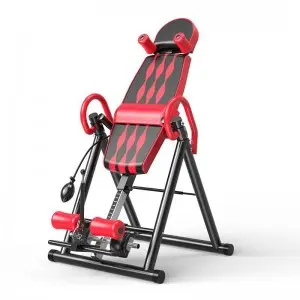
V. Inventory Strategy Recommendations for European Wholesalers
Wholesalers aiming to cover both segments are advised to adopt a dual-product strategy:
- Core Line: Introduce a premium model with GS certification and patented locking support straps, targeting B2B physiotherapy professionals and boutique fitness studios.
- Support Line: Stock 2–3 mass-market models with varying weight capacities, emphasizing Quick-Fold and Tool-Free Assembly for home users via cross-border e-commerce or catalog sales.
Notably, the European market is highly sensitive to product liability. Regardless of the segment, wholesalers must require manufacturers to provide product liability insurance coverage of no less than €1,000,000. This is not merely paperwork but an essential entry ticket to mainstream European sports goods wholesale networks.
By clearly identifying whether orders serve demanding rehabilitation users or casual home stretching consumers, importers can greatly reduce inventory overstock and return losses from product mismatching, building a professional and reliable supply advantage in Europe’s competitive sports goods market.
#EuropeanInversionTableImportGuide #InversionTableWithSupportStraps #PremiumInversionTableSourcing #MassMarketInversionTableCost #GS CertifiedFitnessEquipment #EN957TestStandard #EuropeanHomeFitnessMarket #InversionTableWholesaleSegmentation #PhysiotherapyInversionTableRequirements #FoldableInversionTableEurope
Post time: Apr-27-2026