

What are the noise standards for home treadmills? How can low-noise operation be achieved?
Want to go for a run late at night when all is quiet, but worried the thumping sounds will wake up family or neighbors? The most agonizing aspect of buying a treadmill is often the noise issue. What are the noise standards for home treadmills? This not only affects neighborly harmony but also serves as a key indicator of product design and manufacturing quality. Many discover excessive noise only after bringing one home, facing the hassle of returns and awkward usage. This article reveals the industry’s recognized noise standards and delves into how components—from the motor and running belt to the shock absorption system—work together to achieve true low-noise operation. After reading, you’ll not only learn to select quiet treadmills but also master maintenance secrets to prolong their silent lifespan.
Unveiling Noise Standards: How Many Decibels Constitute “Quiet”?
Both international and domestic regulations set noise limits for household appliances. For home treadmills, the industry-recognized benchmark for “excellent” performance is operational noise below 65 decibels.
What does this mean? Normal conversation averages around 60 decibels. Operating below 65 decibels ensures your workout won’t disturb someone watching TV or conversing in the same room.
Many premium brands highlight this as a core selling point. For instance, a certain international brand’s flagship model, tested in a lab, maintains noise levels below 62 decibels at 10 km/h.
However, note that lab data reflects ideal conditions. Actual home environments vary due to floor materials and room acoustics, so slightly higher readings are normal.
Users often ask: Why do manufacturers dare label their products “quiet” when they’re actually noisy? Here, it’s crucial to understand that “quiet” is a marketing term, not a standard. The key lies in checking specific decibel values or whether there are third-party test reports.
Motor: The “Heart” of Noise – How to Choose?
The motor is one of the primary noise sources. Continuous Horsepower (CHP) is key. Insufficient power causes the motor to strain under high load, resulting in louder noise.
We recommend selecting motors with a continuous power rating of at least 1.5HP. For heavier users or those who frequently run at high speeds, opt for 2.0HP or higher. Adequate power allows the motor to operate smoothly, reducing noise.
DC motors are generally quieter and smoother than AC motors. The internal bearings, silicon steel sheets, and dynamic balancing technology of high-quality motors directly determine their operational noise levels.
We once compared two treadmills at the same price point. Model A used a custom motor from a well-known brand, while Model B used a standard off-the-shelf motor. Under identical loads, Model A was a full 8 decibels quieter.
Many consumers wonder: Is more motor power always better? From a noise perspective, choosing a larger motor within your budget is indeed safer. However, you must also consider overall machine compatibility and energy consumption—it’s not about blindly chasing higher power.
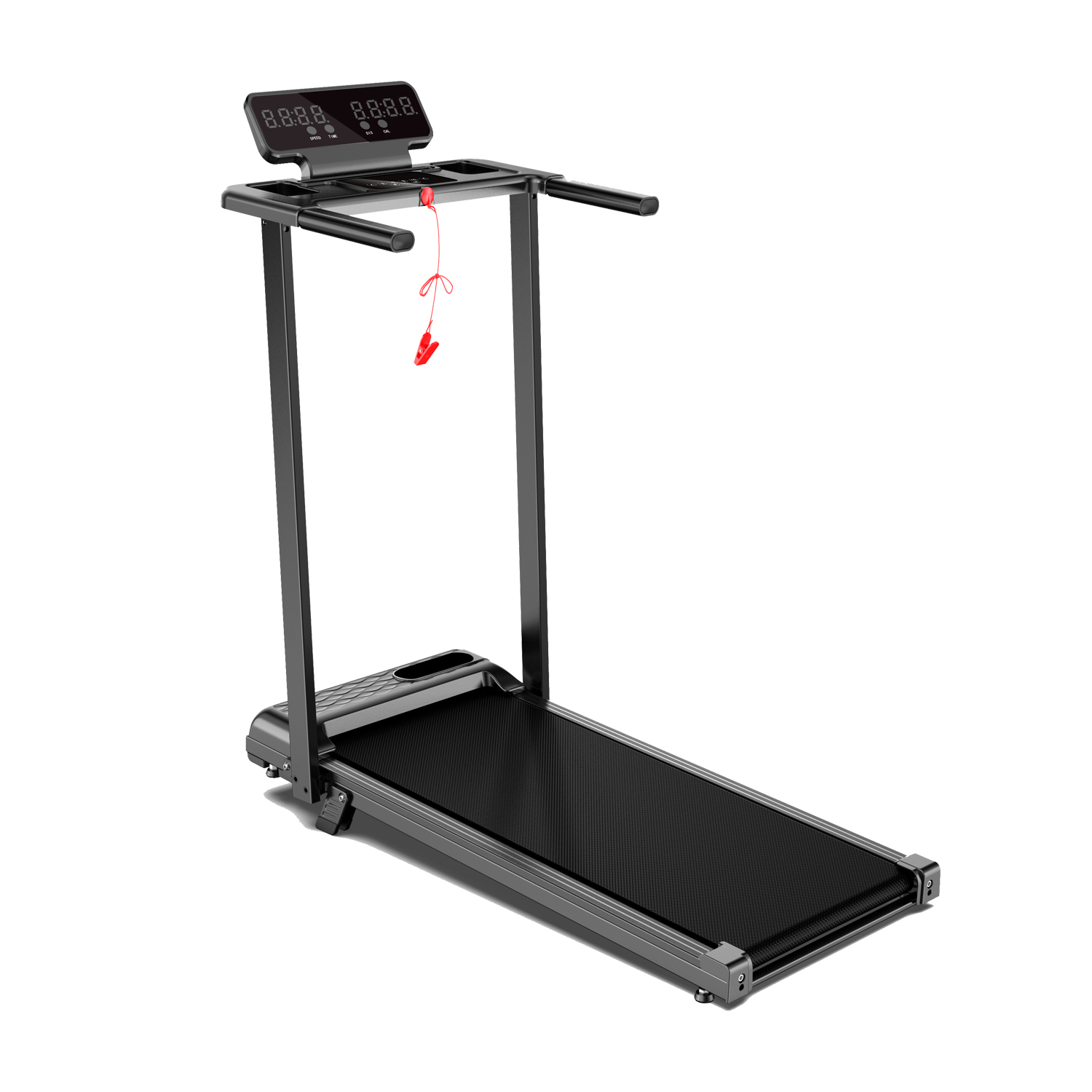
Running Belt and Deck: Where Do Friction and Impact Sounds Come From?
The “clack-clack” footsteps during running primarily stem from the impact between the running belt, the deck, and the user’s feet. This noise is highly noticeable and significantly impacts the experience.
Multi-layer composite decks provide effective cushioning. For instance, decks incorporating fiberboard or cork layers offer far superior shock absorption and noise reduction compared to single-layer hard decks.
Tread thickness and texture also matter. Moderately thick belts (typically 1.6mm+) with optimized patterns strike a balance between traction and quiet operation.
A certain Nordic brand is renowned for its “suspension damping” system. Its deck employs multi-point elastic support paired with high-density belts to significantly absorb impact noise, delivering a soft, quiet foot feel.
Some assume thicker belts are quieter? Not necessarily. Excessively thick belts may increase motor load, generating additional noise. This is a systemic engineering challenge requiring holistic calibration.
Shock Absorption System: Not Just for Joints, But for Quietness
A superior shock absorption system not only protects knees but also acts as a critical barrier against structural noise transmission. Like a car’s suspension, it absorbs impact and prevents vibrations from propagating to the base frame and floor.
Common damping modules like rubber columns, air chambers, and silicone pads are distributed around the running deck. They effectively dissipate impact energy and prevent noise amplification through frame resonance.
Rigid chassis design and cushioned connections are equally vital. A stable, non-loose structure prevents creaking noises.
A notable example is a domestic brand that developed a honeycomb matrix damping system specifically for apartment use. User feedback indicates a 70% reduction in complaints from downstairs neighbors.
Consumer question: Does more damping mean quieter? The scientific arrangement matters more than quantity. The key lies in whether the damping system is optimized for the impact force transmission path.
Daily Maintenance: Keeping Your Treadmill Quiet Long-Term
Even the best machines become noisy without proper care. Regular maintenance is essential for quiet operation.
First, align and lubricate the running belt. Misalignment causes friction against the side rails, producing screeching sounds. Check and adjust alignment quarterly. Apply specialized silicone oil under the deck regularly to reduce dry friction.
Next, inspect fasteners. Over time, screws may loosen, causing abnormal vibrations and noise. Every few months, use a wrench to tighten critical screws.
Finally, cleaning matters. Dust and hair tangled in rollers and motor areas increase resistance and noise. Regularly vacuum beneath the belt.
Our service data shows treadmills with strict maintenance experience over 40% less noise decay after three years compared to neglected machines.
Many worry they lack maintenance skills. In reality, these core steps take only half an hour following the manual. Make it a habit to ensure both machine longevity and quiet operation.
Frequently Asked Questions (FAQ)
Q1: Does placing the treadmill on a mat reduce noise?
Yes, it does. Professional athletic mats (typically 1-2 cm thick) effectively absorb impact vibrations, preventing them from transferring to the floor slab. This is one of the simplest and most effective ways to reduce noise impact on lower floors and is highly recommended as standard practice.
Q2: What’s the most common reason for increased noise after using a treadmill for a while?
The most common cause is a loose or misaligned running belt rubbing against the side rails. Another factor is dry, unlubricated deck boards. First, try adjusting the belt tension and alignment, and check if lubrication is needed.
Q3: How should I choose the running belt and deck to balance quiet operation and durability?
Opt for a multi-layer composite elastic deck (e.g., fiber-wood core) paired with a wear-resistant running belt of moderate thickness (1.6-2.2mm) and appropriate texture. Avoid excessively thin decks or overly coarse belts, as they tend to be noisier and wear faster.
Meta Description: Concerned about noisy treadmills? This article clearly explains noise standards for home treadmills and delves into how motors, running belts, and shock absorption systems work together to achieve lasting quiet operation. Includes key purchasing tips and maintenance secrets to help you run quietly and avoid complaints.
Keywords: treadmill noise standards, home treadmill quiet technology, low-noise treadmill selection, quiet treadmill motors, treadmill shock absorption and noise reduction
Post time: Jan-06-2026