

When purchasing treadmills, do you often face a dilemma? For small gyms, corporate employee lounges, or upscale apartment clubs, top-tier home models feel underwhelming in durability, while pure commercial machines blow budgets and offer excessive features. Traditional boundaries between “home” and “commercial” are being redefined by a new category of equipment. Today, we delve into a solution gaining significant market traction: the 3.5HP home professional treadmill. We’ll dissect how its masterful balance of core performance, durability, and cost effectively bridges the gap between high-end home use and “light commercial” scenarios, empowering you to make smarter, more cost-effective purchasing decisions.
I. Power Revolution: How Does a 3.5HP Motor Redefine “Continuous Power Output” Standards?
The continuous horsepower (CHP) of a motor is the key indicator for whether a treadmill can withstand “light commercial” use. Traditional home models typically range from 2.5-3.0 CHP, sufficient for intermittent use. Pure commercial machines usually start at 4.0 CHP to ensure high-intensity operation for over 16 hours daily.
The 3.5HP motor fills this gap perfectly. It signifies enhanced continuous torque and heat dissipation capabilities. Take our flagship model exported to Northern Europe as an example: its 3.5CHP DC motor sustained a 120kg load at 12km/h for 4 consecutive hours in simulated lab testing, maintaining motor temperature within safe limits with no noticeable performance degradation. What does this data signify? It easily accommodates daytime class schedules for a small studio of around 20 people: each user gets 30-45 minutes of training, with sufficient “rest” intervals for the machine to dissipate heat and recover. This stands in stark contrast to traditional home machines, which may face overheating-induced speed reductions or protective shutdowns.
Common buyer concern: “For light commercial use, with total daily operation possibly reaching 4-6 hours, is 3.5HP really sufficient? Won’t it wear out quickly?”
This question concerns “usage density,” not “total hours.” The key distinction lies between ‘continuous’ and “intermittent” operation. Commercial machines are designed assuming back-to-back users with minimal downtime. In light commercial settings like corporate gyms, peak usage clusters around lunch breaks and after work, with individual sessions typically under 1 hour and several hours of natural intervals in between. The 3.5HP motor paired with optimized cooling ducts is precisely engineered for this pattern of intermittent, medium-to-high-intensity use. As long as the average daily load stays within the design parameters, its reliability over the lifespan far surpasses that of ordinary home machines, while avoiding the excessive premium paid for commercial machines designed for extreme conditions.
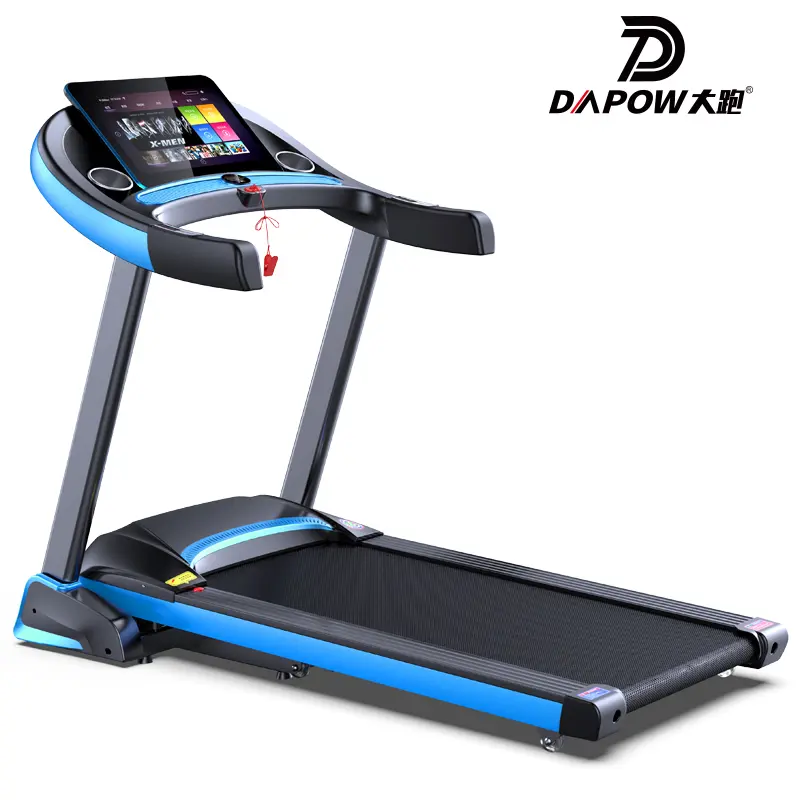
II. Structural Engineering Triumph: Precision Reinforcement Over Bulky Construction
Commercial machines project an image of immense bulkiness because they must withstand the rough handling of countless unknown users (varying weights and running styles). For targeted light commercial settings (like boutique studios with high-caliber members), however, we can employ more precise engineering design.
A qualified 3.5HP home professional treadmill employs targeted structural reinforcement. For instance, the multi-layer composite deck beneath the belt features localized strengthening in high-impact support zones, rather than using a single, excessively thickened plate across the entire deck. This ensures shock absorption and support while controlling weight and cost. Similarly, at the column-to-base frame junctions, multi-bolt reinforcement or monolithic casting—similar to commercial machines—is employed to withstand long-term structural stress, rather than thickening all frame materials indiscriminately.
A compelling case study from Southeast Asia illustrates this: A developer outfitting a high-end serviced apartment complex with a gym initially planned to purchase light commercial machines but faced budget constraints. We recommended the 3.5HP professional model, providing reinforcement plans for critical components and laboratory fatigue test reports. After comparison, they purchased 20 units. A follow-up two years later revealed average daily usage of 3-5 hours, with no structural issues beyond routine maintenance. Apartment residents (primarily high-net-worth individuals) provided excellent feedback on the equipment’s quiet operation and stability. This demonstrates that within defined usage parameters, precise engineering reinforcement proves more effective than blind reliance on “commercial-grade” labels.
Common user query: “These treadmills list a max weight capacity of 150kg, matching commercial models. What’s the actual difference?”
Maximum weight capacity is a static safety metric, while fatigue resistance defines the core distinction between commercial and home-use equipment. Commercial machines can withstand a 150kg user running 2 hours daily for years; professional home models can handle a 150kg user running 1 hour daily or a 100kg user running 3 hours daily for years. The difference lies in the durability design margin of critical joint components (like roller bearings and motor drive boards). For light commercial use, the latter’s fatigue resistance is entirely sufficient, making it the most cost-effective choice.
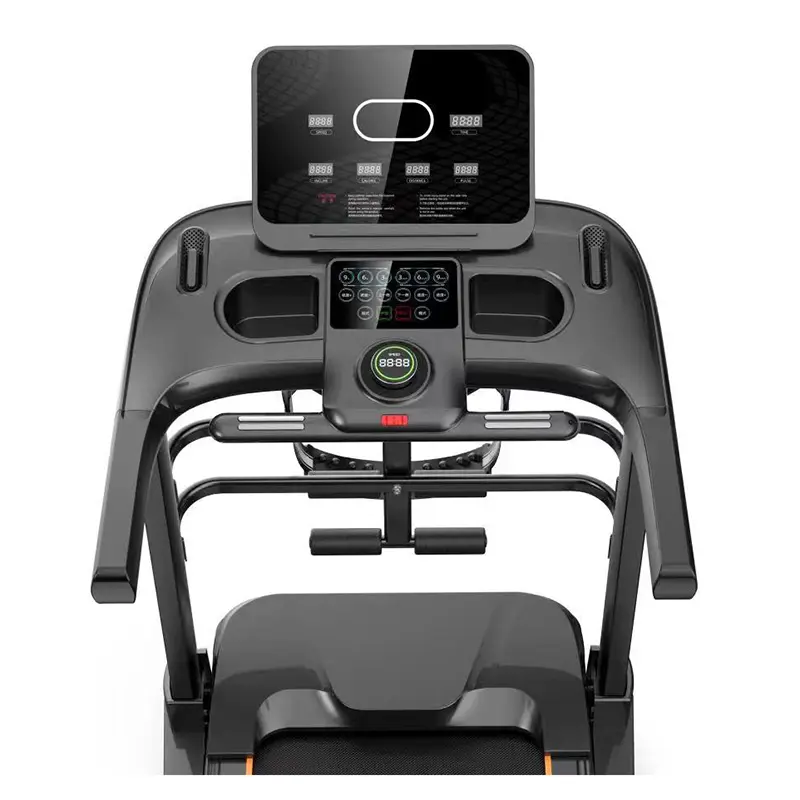
III. Balancing Functionality and Maintenance: From “Feature Showmanship” to “Reliable Practicality”
Pure commercial machines often prioritize extreme reliability and minimal maintenance costs, resulting in relatively “unadorned” functionality. Top-tier home models may pile on interactive entertainment features. Professional models for light commercial use take a third path: retaining core practical functions while ensuring commercial-grade reliability.
• Motor and Drive: Incorporates industrial-grade bearings and thicker armature shafts to ensure long-term stable power transmission.
• Control System: Emphasizes streamlined, stable program logic with low failure rates, rather than overly complex or flashy touchscreen interfaces. The materials and tactile feedback of buttons and knobs align with commercial standards, designed for frequent operation.
• Maintenance-Friendly Design: The tread belt adjustment mechanism is positioned for easy access. Lubrication and maintenance reminders are clear and straightforward. Even the modular replacement design for critical components prioritizes operational convenience for gym maintenance staff—a feature far more appreciated by actual managers than a flashy oversized screen.
We once tracked a batch of equipment sold to a European chain of physical therapy centers, where treadmills were used for rehabilitative walking training. Their top priority wasn’t the number of training programs, but whether the equipment’s startup, speed adjustment, and stop responses were linear and lag-free—critical for patient safety and rehabilitation pacing. The 3.5HP professional model’s precise motor control and robust running belt precisely met this core requirement, with durability fully suited for 8-hour daily use under light load conditions (primarily slow walking). This exemplifies the perfect alignment of functionality and requirements.
Common buyer concern: “If used in rental apartments or hotels, will the failure rate be high? What about maintenance costs?”
This is precisely why selecting such professional models matters. Compared to standard home units, their core components (motor, drive board, deck) offer significantly enhanced reliability—the very parts with the highest repair costs. The replacement cost and availability of daily wear parts (like running belts and foot rails) are key factors to evaluate during procurement. We recommend selecting suppliers offering explicit commercial-grade warranty terms (e.g., 3-5 year motor warranty) and maintaining local spare parts inventory. This significantly reduces your long-term operational risks and total cost of ownership.
IV. Redefining the Market: Defining Products by “Usage Scenarios,” Not Vague Labels
Ultimately, “home” and “commercial” are shifting from black-and-white labels to a spectrum describing usage intensity ranges. For procurement decision-makers, a smarter approach is to disregard labels and focus on actual usage scenarios. The 3.5HP home professional treadmill is precisely tailored for these contexts:
1. Boutique Fitness Studios: Moderate user volume, fixed session durations, and instructor supervision.
2. Premium Apartment/Corporate Gyms: Stable, high-caliber user base with pronounced peak-and-trough usage patterns.
3. Rehabilitation Centers/Physical Therapy Clinics: Extended usage periods with low-intensity loads (primarily walking), demanding exceptional stability and precision.
4. Small Hotels/Serviced Apartments: As value-added amenities catering to occasional guest cardio needs, requiring stylish yet durable designs.
If your equipment averages less than 4-6 hours of daily operation, with single sessions rarely exceeding 1-2 hours, a well-designed, solidly built 3.5HP home professional treadmill will likely offer far superior overall value and reliability than a bulky, overpriced entry-level “commercial machine.” This represents a new opportunity created by market segmentation and an efficiency revolution driven by modern engineering.
 FAQ (Frequently Asked Questions)
1. Q: How can I determine if a treadmill labeled as 3.5HP uses genuine components or has inflated specifications?
A: Check three points: First, verify the motor brand and model—parameters from reputable brands (like ACTP/Risejet) are more reliable. Second, request third-party test reports for Continuous Horsepower (CHP), not just Peak Horsepower (HP). Third, conduct an on-site test: At maximum speed (e.g., 16 km/h) with load (have a heavier user test it), the motor should run with a low, steady hum. The frame should show no abnormal vibrations, and the belt must not slip. Overrated motors typically reveal their true performance limitations under high-speed, heavy-load conditions.
2. Q: For light commercial use, which warranty terms should be prioritized?
A: Never rely solely on “X-year warranty for the entire machine.” You must clarify: the warranty period for the motor and drive board (ideally ≥3 years), as these are core cost components. The warranty for the frame structure (should cover structural defects like weld fractures). Whether on-site repair service is provided or if you need to ship the unit yourself. Clear warranty terms reflect the supplier’s confidence in their product’s durability and are key to your risk management.
3. Q: What are the primary advantages of this model compared to entry-level commercial machines in the same price range?
A: The main advantage lies in the balance between “overall user experience” and “ownership cost.” Entry-level commercial machines in the same price range may offer slight advantages in motor power and frame construction, but they often compromise significantly on shock absorption technology, noise reduction, aesthetic design, and smart interaction. This can result in a rough and noisy user experience. Professional home models, however, deliver a more comfortable, quieter, and modern experience while ensuring sufficient durability. This is crucial for attracting and retaining high-end residential users or boutique studio members. Simply put, it’s both durable and user-friendly.
Meta Description: Explore how 3.5HP home-professional treadmills perfectly meet the needs of light commercial settings like boutique gyms and corporate apartments through sustained power, precision-engineered structures, and reliable practical features. This guide offers procurement professionals a cost-effective solution that transcends traditional home/commercial boundaries, optimizing purchasing decisions.
Keywords: 3.5HP treadmill procurement, light commercial treadmill selection, home professional treadmill, treadmill motor CHP, boutique gym equipment solutions
Post time: Jan-30-2026