

In the American fitness equipment market, importers’ product selection decisions are never isolated purchasing behaviors, but a comprehensive response to regional consumption trends, end-user needs, regulatory compliance systems, and supply chain efficiency. In 2026, the North American fitness equipment market is undergoing a profound transformation from the “post-pandemic dividend period” to the “intelligence and functional upgrading period”. Against this backdrop, adjustable inversion tables—a fitness equipment with both rehabilitation and functional training attributes—are becoming an emerging category attracting increasing attention from importers. Based on real market data, regional fitness trends, and importers’ actual product selection frameworks, this article systematically elaborates on the selection logic of adjustable inversion tables for American fitness equipment importers, and focuses on analyzing how to make scientific purchasing decisions by aligning with American regional fitness trends.
I. Overview of the American Fitness Equipment Market: The Macroeconomic Environment Faced by Importers
The American fitness equipment market is in a steady growth trajectory. According to market research data, the size of the American fitness equipment market in 2026 is approximately $18.32 billion, and it is expected to exceed $29.05 billion by 2035, with a compound annual growth rate (CAGR) of 5.2%. Among them, North America is the core market, accounting for 39.8% of the regional market share by 2035, with a market value expected to reach $11 billion. In the U.S. market, fitness equipment consumption rebounded to 1.2 million tons in 2024, with revenue reaching $6.5 billion, ending a two-year downward trend. In terms of imports, China accounts for 83% of U.S. fitness equipment imports, indicating North America’s high dependence on overseas supply chains.
From the perspective of consumption structure, home fitness equipment is one of the fastest-growing segments, with a projected CAGR of 5.1% between 2026 and 2032. Smart fitness equipment is particularly prominent in North America, accounting for 51.03% of the global smart fitness equipment market share in 2024. For importers, this means that product selection directions need to balance the stable demand of the traditional home market and the incremental opportunities brought by intelligence and functional upgrading.
II. American Regional Fitness Trends: Analysis of Category Alignment for Adjustable Inversion Tables
1. Paradigm Shift from Aerobic-Dominant to Functional Training and Recovery
According to the 2026 Global Fitness Trends Report released by the American College of Sports Medicine (ACSM), functional fitness training entered the top ten for the first time, while traditional High-Intensity Interval Training (HIIT) dropped from 6th to 12th place. This change reflects an important shift in consumer preferences: people no longer only pursue high-intensity calorie consumption, but also pay more attention to the functionality, sustainability of training, and physical recovery.
At the same time, recovery-oriented training is upgrading from an “add-on” to a “core pillar” of fitness programs. Industry reports show that gyms are actively building recovery zones, hot-cold therapy areas, and integrating active recovery into member experiences. As a low-risk rehabilitation device that achieves spinal decompression through gravitational traction, adjustable inversion tables perfectly align with this trend. Research from the Cleveland Clinic points out that inversion therapy can relieve lower back pain, muscle spasms, and sciatica, and when used as an auxiliary therapy, it may even reduce patients’ need for surgery in two years.
2. Growing Demand for Rehabilitation Auxiliary Equipment Driven by Aging Population
Another key trend in the American market is demographic changes. Consumers aged 55 and above now account for 21% of fitness equipment expenditure, with their core needs focusing on rehabilitation auxiliary equipment. The global inversion table market is expected to grow from $776.9 million in 2025 to $1.2 billion by 2035, with a CAGR of 4.4%. North America is expected to dominate this market due to consumers’ high disposable income and the aging population’s priority focus on health prevention measures.
For importers, this means that adjustable inversion tables are no longer a niche rehabilitation device, but a potential category integrating into mainstream fitness consumption scenarios. In purchasing decisions, priority should be given to models that can meet both home rehabilitation needs and the needs of gym recovery zones.
3. Home Demand for Hybrid Fitness and Space Efficiency
72% of overseas renters and small families face the pain point of “wanting to exercise but lacking space”. Foldable and storable designs have become one of the core selling points of home fitness equipment. Adjustable inversion tables can usually be folded and stored when not in use, meeting the home market’s requirements for space efficiency. When selecting products, importers should prioritize models with stable folding structures, small folded thickness, and easy storage.
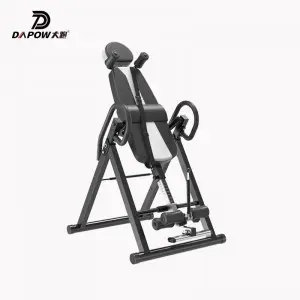
III. Core Technical Parameters and Procurement Evaluation Framework for Adjustable Inversion Tables
1. Weight Capacity: A Key Safety Indicator for the American Market
There are significant differences in body shape and weight distribution between American consumers and Chinese consumers. According to market segmentation data, inversion tables are divided into three levels by weight capacity: under 250 lbs, 251 to 400 lbs, and over 400 lbs. For models targeting the home market, it is recommended to meet a weight capacity of at least 250 lbs; for models purchased for commercial gyms or rehabilitation centers, priority should be given to heavy-duty configurations of over 400 lbs.
2. Inversion Angle Adjustment System
The core function of an inversion table lies in the precise adjustment of angles. The market mainly divides into two types: manual adjustment and electric adjustment. Manual inversion tables are favored by home users for their simplicity and cost-effectiveness, while electric inversion tables offer higher convenience and functional integration. When selecting products, importers should pay attention to the smoothness of the adjustment system, the reliability of the locking device, and the clarity of the angle indication. A complete product line with adjustable angles ranging from slight tilt to 180-degree full inversion is more competitive, and importers can choose corresponding configurations according to the positioning of the target market.
3. Material and Structural Durability
In terms of materials, inversion tables mainly use steel, aluminum, plastic, and wood. The North American market has high requirements for structural stability, and steel frames are the mainstream choice. In procurement evaluation, focus should be placed on pipe wall thickness, welding quality, surface rust-proof treatment (such as powder coating or electroplating), and the durability of adjustable components (such as ankle fixing devices and grips). The adjustability and comfort of the headrest are one of the core indicators for end users to evaluate the user experience of inversion tables, especially affecting the acceptance of long-term use.
4. Safety Certification: A Mandatory Threshold for Entering the American Market
For fitness equipment exported to the U.S. market, compliance with the Consumer Product Safety Commission (CPSC) is mandatory. All fitness equipment must pass testing by a third-party accredited laboratory and obtain a certificate of conformity. Specifically, ASTM F2276 applies to the structural integrity and moving parts safety standards for home fitness equipment; motorized equipment such as electric treadmills also need to meet the specific requirements of ASTM F3105. In addition, the U.S. imposes a tariff of 2.5% to 7.5% on imported fitness equipment, and requires UL (safety) certification and FCC (electromagnetic compatibility) certification (if electronic components are involved). Starting from 2025, the new environmental label requirement requires marking the proportion of recyclable materials. When selecting products, importers must require suppliers to provide complete certification documents, including test reports issued by CPSC-accredited laboratories and General Conformity Certificates (GCC).
IV. Procurement Selection Logic: A Decision Model Based on Regional Fitness Trends
1. Product Positioning Stratification Strategy
The consumption structure of the American fitness equipment market shows obvious hierarchical characteristics. According to 2025 U.S. consumption data, households with fitness needs spend more than $1,100 on fitness equipment annually, of which large equipment accounts for 45%, smart equipment accounts for 30%, and small equipment and rehabilitation equipment account for 25% in total. Importers can divide the adjustable inversion table product line into three positioning levels:
- Entry-level (Home Basic Rehabilitation): Targeting home rehabilitation users over 55 years old or people with mild back pain, manual adjustment, 250 lbs weight capacity, basic functions, and price-sensitive. The core procurement considerations for this level are cost control and basic safety compliance.
- Mid-range (Home Fitness and Preventive Health Care): Targeting home fitness users aged 35 to 54, balancing rehabilitation and daily stretching, manual or semi-electric adjustment, 300 to 350 lbs weight capacity, equipped with comfortable headrest and non-slip ankle fixing devices. This level needs to balance functional integrity and cost-effectiveness.
- High-end (Commercial Rehabilitation Centers and Fitness Clubs): Targeting physical therapy clinics, fitness club recovery zones, and sports training institutions, electric adjustment, over 400 lbs weight capacity, with intelligent connection functions (such as APP posture tracking, usage data recording). In May 2025, ProForm launched an intelligent inversion table with IoT connection and supporting APP posture tracking functions, indicating that high-end products are evolving towards digitalization.
2. Regional Adaptation Principles
There are differences in demand characteristics across different American markets. The U.S. market accounts for 96% of North American fitness equipment consumption and 95% of production, making it the largest single market. When selecting products, priority should be given to ensuring that products meet the complete compliance requirements of ASTM and CPSC, and are equipped with English manuals and warning labels. The import trend of the Canadian market declined between 2023 and 2024, but in the long run, there is still room for growth in rehabilitation and low-impact fitness equipment. As an emerging growth region, Latin America benefits from demographic dividends and increased health awareness, with a growth rate exceeding the North American average. For product selection targeting the Latin American market, more emphasis should be placed on price competitiveness and the reliability of basic functions.
3. Supply Chain and Cost Efficiency Evaluation
The American fitness equipment market is highly dependent on imports, with imports far exceeding exports (1 million tons imported, only 40,000 tons exported). China accounts for 83% of North American fitness equipment imports, indicating the maturity of the Asian supply chain in this category. When selecting suppliers, importers should evaluate the following dimensions: whether they have ISO 9001 quality management system certification; whether they can provide third-party test reports for standards such as ASTM F2276; whether they have OEM/ODM customization capabilities (such as custom brand logos, packaging, etc.); whether they have a stable delivery record and after-sales response mechanism.
For mid-to-high-end inversion tables, whether the supplier has integrated production capabilities such as steel structure processing, CNC manufacturing, robotic welding, and powder coating directly affects the structural consistency and long-term reliability of the product.
4. Scientific Basis and Product Value Proposition
The core value proposition of inversion tables must be based on reliable clinical research, not marketing rhetoric. A randomized controlled trial study showed that both inversion table therapy and the Mulligan technique have significant clinical benefits for patients with chronic lower back pain, and inversion table therapy is superior to the control group in improving lumbar flexibility. Another study showed that rehabilitation training using inversion tables helps improve back and abdominal muscle strength in women with herniated discs. When purchasing, importers should require suppliers to provide relevant clinical research citations or medical endorsements to enhance the credibility of terminal marketing links. Authoritative medical institutions such as the Cleveland Clinic also have positive evaluations on the effectiveness of inversion therapy as an auxiliary method, and these materials can be used for B2B customer product information preparation.
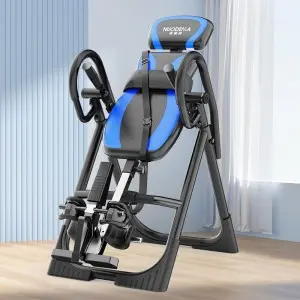
V. Selection Summary and Procurement Recommendations
The American fitness equipment market is in a critical stage of functional upgrading and intelligent transformation. As a cross-category connecting rehabilitation scenarios and home fitness scenarios, adjustable inversion tables have a market growth logic highly aligned with regional fitness trends. For importers, a successful product selection strategy should include the following core elements:
- Priority to Base Materials and Craftsmanship: Use steel frames that meet North American standards to ensure that welding quality and surface anti-corrosion treatment meet the standards. This is the premise of meeting CPSC compliance requirements and end-user safety expectations.
- Differentiated Positioning: Select manual or electric inversion table product lines according to different target channels. For the home market, focus on cost-effectiveness and foldable storage design; for commercial rehabilitation centers, focus on electric adjustment, high weight capacity, and intelligent connection functions.
- Compliance First: Before sample confirmation and bulk procurement, verify whether the supplier has compliance documents such as ASTM F2276 and CPSC General Conformity Certificates (GCC). For models with electronic components, also confirm the UL and FCC certification status.
- In-depth Supply Chain Evaluation: Select suppliers with vertically integrated production capabilities and who can provide complete technical documents (bill of materials, design drawings, test reports) to reduce long-term cooperation risks.
- Product Value Transmission: The selection of inversion tables should not only stay at the parameter comparison level, but also convey the rehabilitation value and preventive health care value of the product to terminal channels based on reliable clinical research data, thereby establishing a differentiated brand perception in the competition.
Through a systematic product selection framework, importers can accurately capture the structural opportunities in the American fitness market, build adjustable inversion tables into a core category with both functionality and profitability, and gain sustained growth momentum in the rapidly evolving regional fitness trends.
#AdjustableInversionTableSelection #AmericanFitnessEquipmentImport #InversionTableProcurementGuide #ACSM2026FitnessTrends #ASTMF2276Compliance #CPSCFitnessEquipmentCertification #RehabilitationFitnessEquipmentSelection #HomeInversionTableRecommendation #FunctionalTrainingEquipment #CommercialInversionTableProcurement
Post time: Apr-09-2026