

One Treadmill Per Order and No Margin Left After Freight
A home fitness importer supplying a European online retailer was shipping one treadmill per order, and the economics were thin: heavy carton, high last mile cost, assembly complaints, and a return rate that ate what was left. The retailer wanted a lower price. The importer could not give one without cutting specification, which would have raised the return rate further. Competing on the price of a single heavy item is a race to the bottom, because the cost structure of one treadmill per delivery cannot absorb freight, assembly support and returns at the same time.
The way out was not a cheaper treadmill, it was a second item in the same box, the same delivery and the same assembly visit. Retailers that pair a cardio unit with a recovery or mobility item raise order value without raising shipping cost, and they give the customer a reason to accept a higher basket instead of a discount on a single unit. Here is how to build that bundle and what to watch when you do.
Why the Bundle Works on Cost, Not Only on Marketing
A treadmill delivery has fixed costs that do not scale with what is inside: the vehicle, the two-person lift, the appointment slot and the assembly time. Adding a second, lighter, flat-packed item to the same delivery costs a small amount of cube and almost nothing in last mile. Every additional item in that delivery contributes margin against costs that were already being paid, which is the entire economic argument for bundling and it is strongest on heavy cardio products. Market it as a programme and sell it as a margin decision.
Choose the second item on three tests. It must be wanted by the same customer, it must ship in the same logistics profile, and it must not create a new category of complaint. A bundle item that generates its own returns does not raise order value, it multiplies the problem, and the returns come from the item the customer did not intend to buy. Recovery and mobility equipment passes all three tests for a cardio buyer.
Start the Range With the Cardio Unit Customers Actually Have Room For
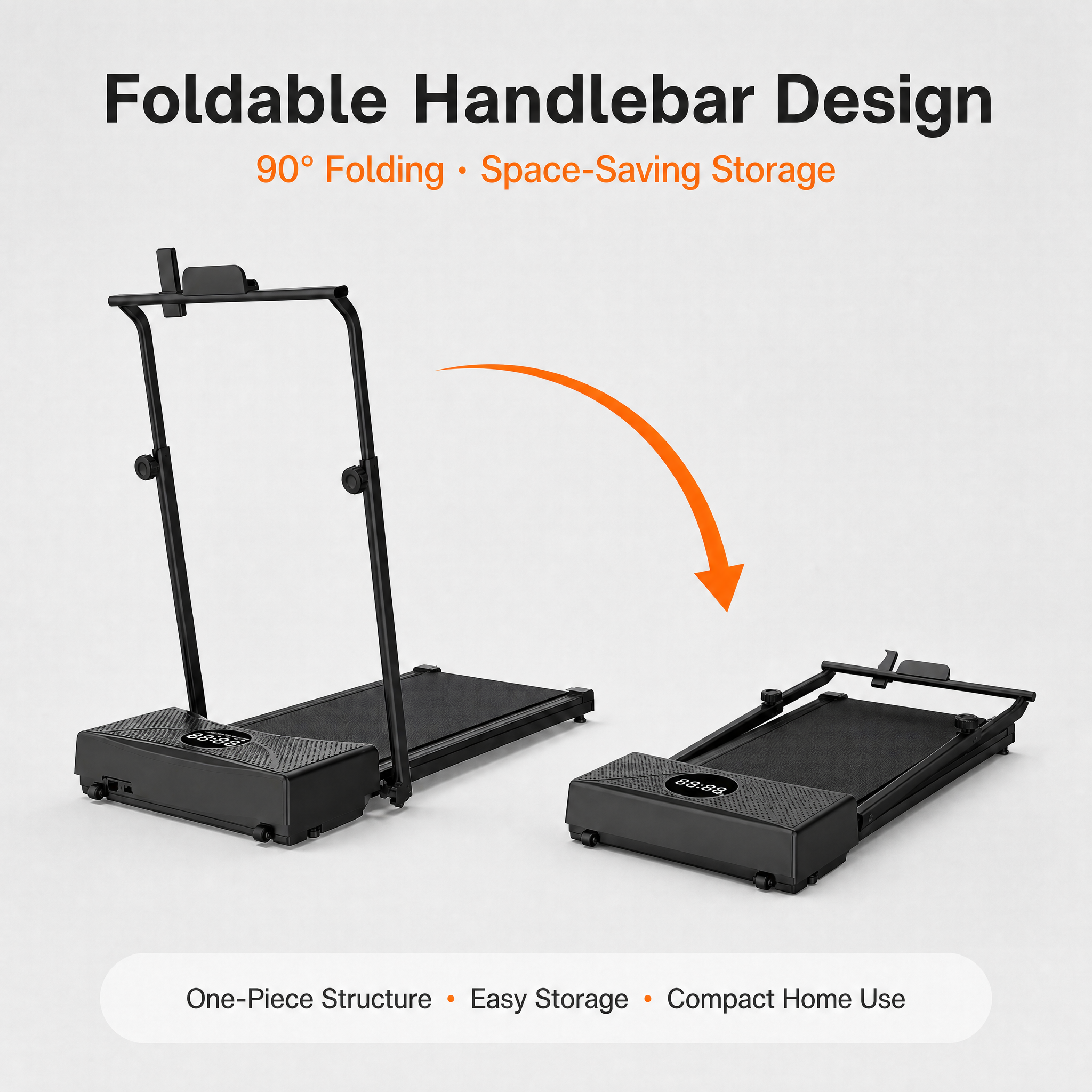
Space is the constraint that decides most home cardio purchases, more than price in a lot of markets. A compact walking pad with a folding handrail fits under a sofa or a bed, ships in a smaller carton and assembles faster than a full-size treadmill. Leading with the compact format widens the addressable market to apartments and small homes, which is where the volume growth in home fitness has been. Keep the full-size machine in the range for the customers who have a dedicated room.
Incline capability matters more on a compact unit than buyers expect, because it is what turns a walking pad into a genuine training session rather than a standing desk accessory. A model such as a 2-in-1 walking pad with handrail and electric incline gives the compact format real training range and justifies a higher price than a flat unit.
Build Ladder Steps Inside the Cardio Side
The bundle needs a good, better, best on the cardio side too, so the retailer can present a choice rather than a single price. Display, console clarity and folded height are the three specifications customers can see and compare, and they are the ones to separate the tiers on. Separate ladder steps on visible specifications, not on motor ratings, because a customer can see a display and a folded height and cannot verify a motor claim.
Middle tier should carry the clearest console, since that is the feature that survives in a listing photograph. A unit such as a 2-in-1 walking pad with a triple window display reads as a step up in a comparison table without any explanation from the sales staff.
The entry step should be the foldable, simplest version, priced to win the click and to make the middle tier look reasonable. A compact option such as a foldable 2-in-1 walking pad with handrails anchors the ladder at the bottom and is the unit most often bought as a second machine for a second room.
Add Recovery Equipment to the Same Basket
Recovery and mobility equipment is the natural companion to home cardio: same customer, same household, same delivery, lighter carton, lower assembly burden, and it addresses the back and posture complaints that come with desk work and with starting a walking programme. Recovery equipment also has a lower return rate than cardio, because there is no motor, no belt and no assembly calibration to go wrong, which is exactly what a bundle needs.
Choose it for adjustability and for a stated user weight limit, because those are the two specifications that decide both safety perception and the size of the addressable market. A unit such as an adjustable inversion table with a head pad should be listed with its height range and its stated maximum user weight, not with a general comfort claim.
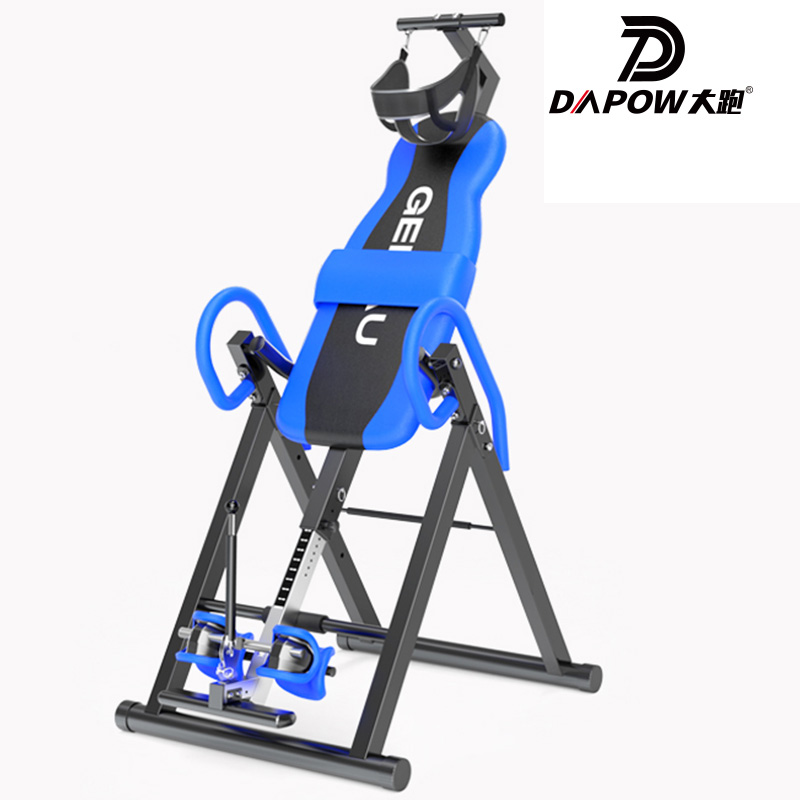
Hold a second price point on the recovery side so the bundle can be presented at two levels. A newer model such as a new design inversion table sits above the entry unit and lets the retailer offer a standard and a premium bundle without changing the cardio item.
Get the Retail Execution Right
Three things decide whether the bundle sells. Photography has to show both items in one room, because a customer buying a treadmill for a small flat needs to see that both will fit. The listing has to state clearly what is in the bundle and what the saving is against buying separately. And the warranty and service story has to cover both items under one claim process, because a bundle with two different service routes generates the support tickets that destroy the margin it created. Agree the service process before the bundle goes live.
Check the Freight Math Before You Commit
Model the bundle on landed cost per order rather than on gross margin per unit: carton cube, container utilisation, last mile band, assembly minutes and the blended return rate. Run those five and most cardio plus recovery bundles show a clear gain, because the incremental cost sits almost entirely in product and the fixed delivery cost was already being paid. Then hold the bundle through the season rather than using it as a short promotion, because a permanent bundle changes how the retailer merchandises the category.
Related Pages
- How to Choose Treadmills for Corporate Wellness Programs
- How to Source Treadmills for Amazon FBA and Online Marketplaces
- Private Label Opportunities for Walking Pads and Compact Treadmills
Post time: Oct-13-2026