

Customer body type consideration: Recommend suitable treadmills for customers of different body types
In commercial scenarios such as gyms and enterprise fitness areas, whether the selection of treadmills meets the needs of users with different body types directly affects the user experience and the durability of the equipment. Many purchasers, due to neglecting the issue of body shape adaptation, have led to premature damage of the equipment and poor user experience. This article starts from a practical perspective, breaks down the core needs of customers with different body types, sorts out the key logic of treadmill selection, and helps you precisely match and adapt to the plan.
Petite users: Emphasize flexible adaptation and space utilization
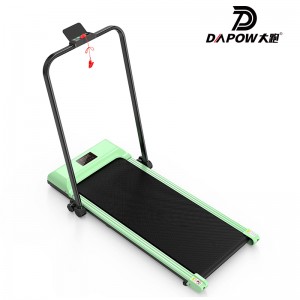
For users with a petite build, the core adaptation points of a treadmill lie in its ease of operation and the precise matching of the size of the running belt. A running belt that is too wide will increase the user’s walking burden, while one that is too narrow may lead to the risk of tripping. Generally, it is recommended to choose a running belt with a width of 45-48cm, which can not only meet the daily running needs but also enhance the flexibility of use.
In addition, such users also have requirements for the overall size of the treadmill, especially in commercial scenarios with limited space (such as small gyms and office fitness corners), the compact design of small commercial treadmills has more advantages. At the same time, the shock absorption system of the equipment also needs to be given special attention. Users with small body types have a relatively light weight. An appropriate shock absorption force can prevent joints from being damaged due to excessive ground reaction force and improve the comfort of use.
Standard-sized users: Balance performance and multi-functionality
Standard-body users are the core audience of commercial treadmills. When choosing a model, a balance needs to be struck among basic performance, durability and multi-functionality. It is recommended to choose a running belt width of 48-52cm. This size can meet the running posture requirements of most people and avoid movement restrictions caused by a too narrow running belt.
In terms of core performance, the motor power and load-bearing capacity of the treadmill are key indicators. It is recommended to choose a motor with a continuous power of over 2.5HP and a load-bearing capacity of no less than 120kg, which can not only support long-term continuous use but also meet the needs of running of different intensities. In addition, it is advisable to consider equipping basic functions such as heart rate monitoring and speed adjustment to meet the diverse exercise needs of users and enhance user stickiness in commercial scenarios.
For large-sized and heavy-duty users: The core focus is on load-bearing capacity and stability
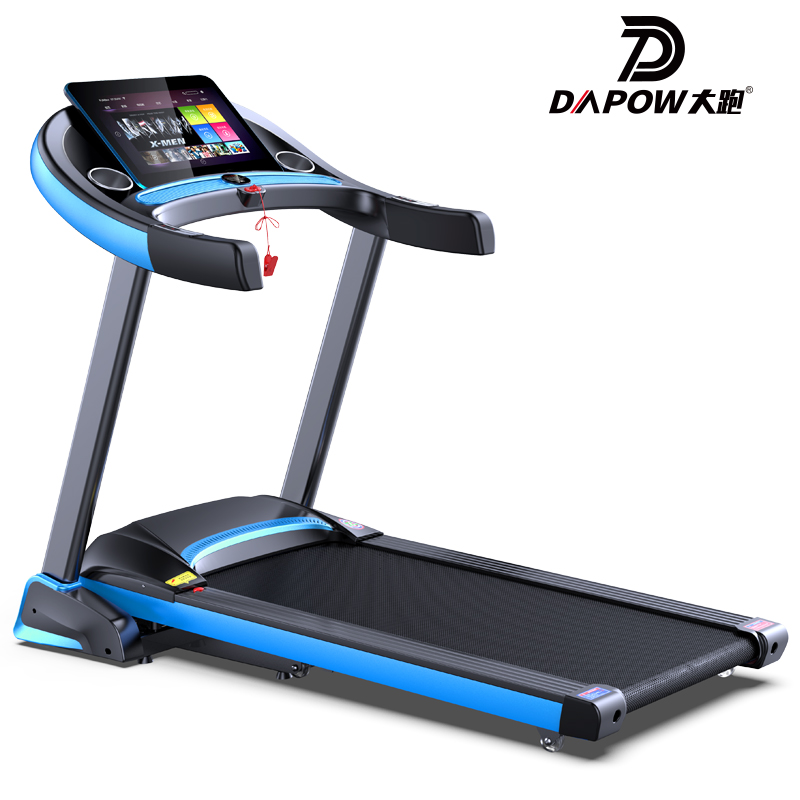
Large-sized or heavy-duty users have the most stringent requirements for treadmills. Improper selection can easily lead to equipment failure and even pose safety hazards. The primary concern is the load-bearing capacity of the treadmill. It is recommended to choose a professional model with a load-bearing capacity of over 150kg. The frame of the machine body should be made of high-strength steel to ensure stability during operation and avoid problems such as body shaking and running belt deviation.
The width of the running belt is recommended to be no less than 52cm, and the material of the running belt should have high wear resistance and anti-slip properties, capable of withstanding greater friction. At the same time, the performance of the treadmill’s shock absorption system is of vital importance. High-quality shock absorption technology can effectively disperse the impact force, reduce damage to the user’s joints, lower the noise during equipment operation, and extend the service life of the machine body. It is recommended to choose a motor power of 3.0HP or above to ensure stable performance even under high-load operation.
The core of commercial procurement: The key principle of taking into account the compatibility of multiple types
For the procurement requirements of commercial scenarios, two core principles need to be grasped to take into account the adaptability for users of different body types. First, give priority to models with strong adjustability, such as treadmills where parameters like the width and slope of the running belt can be flexibly adjusted, which can adapt to users of more body types. Second, emphasis should be placed on the durability and safety of the equipment. Core indicators such as the material of the body, the quality of the motor, and the load-bearing capacity must comply with commercial standards to avoid equipment wear and tear caused by frequent use.
In addition, the convenience of daily maintenance should also be taken into account. For instance, models with easy-to-remove running belts and easily replaceable components can reduce the cost of later operation and maintenance. Only by understanding the adaptation needs of customers with different body types can the selection of treadmills be more in line with the actual usage scenarios in commercial Settings, enhancing user experience while maximizing the value of the equipment.
Post time: Dec-18-2025