

Anyone who’s walked through a warehouse in Ningbo or Shenzhen knows the sight: stacks of folding treadmill boxes, each one a slightly different size, each loaded the way the factory’s been doing it for a decade. The warehouse manager squints at the container, does some quick mental math, and says, “Yeah, we can fit about 180 units.” Fast forward three days, and you’ve got a half-empty container rattling across the Pacific while you’re paying for 40 feet you didn’t use. That’s the kind of quiet bleeding that kills margins on small walking treadmills.
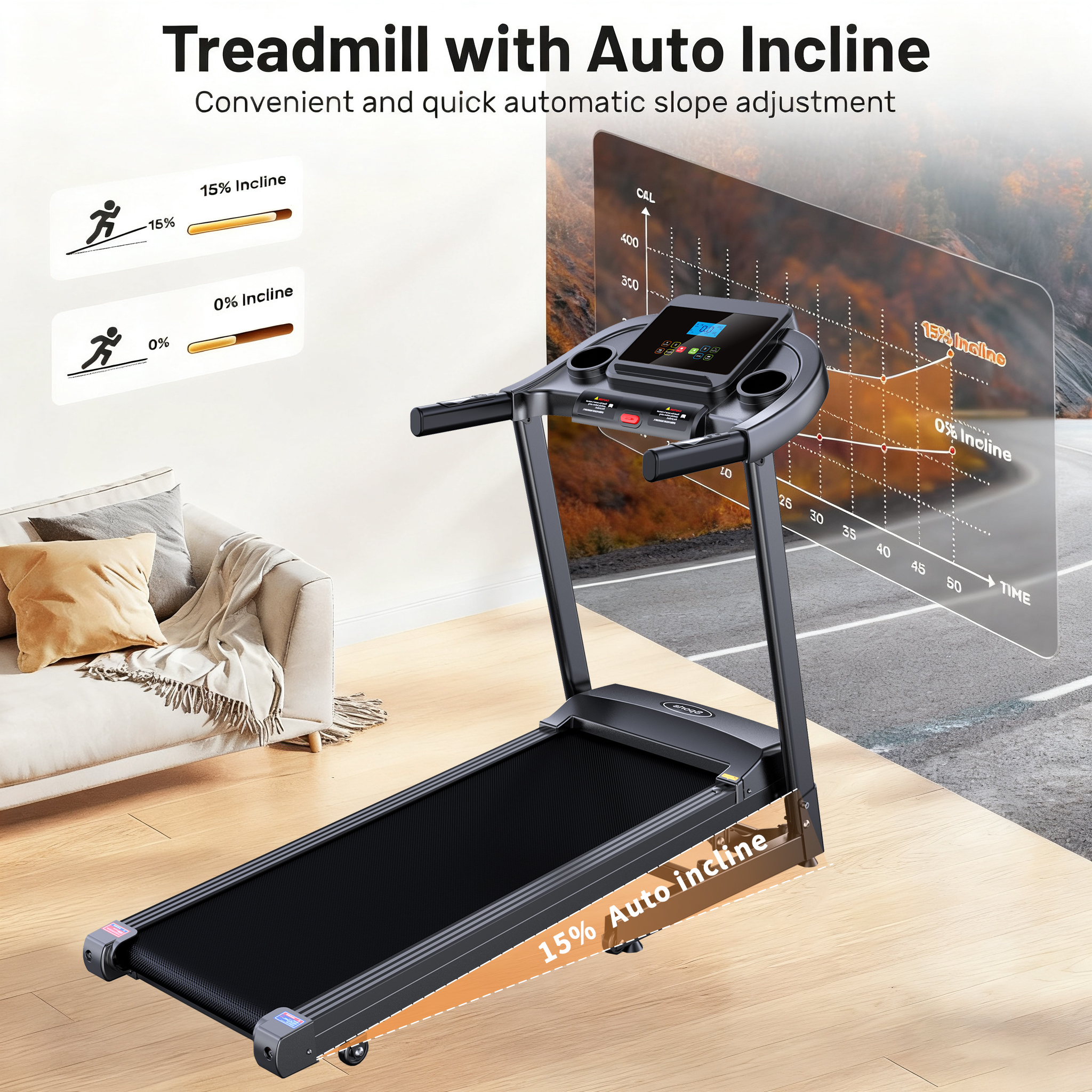
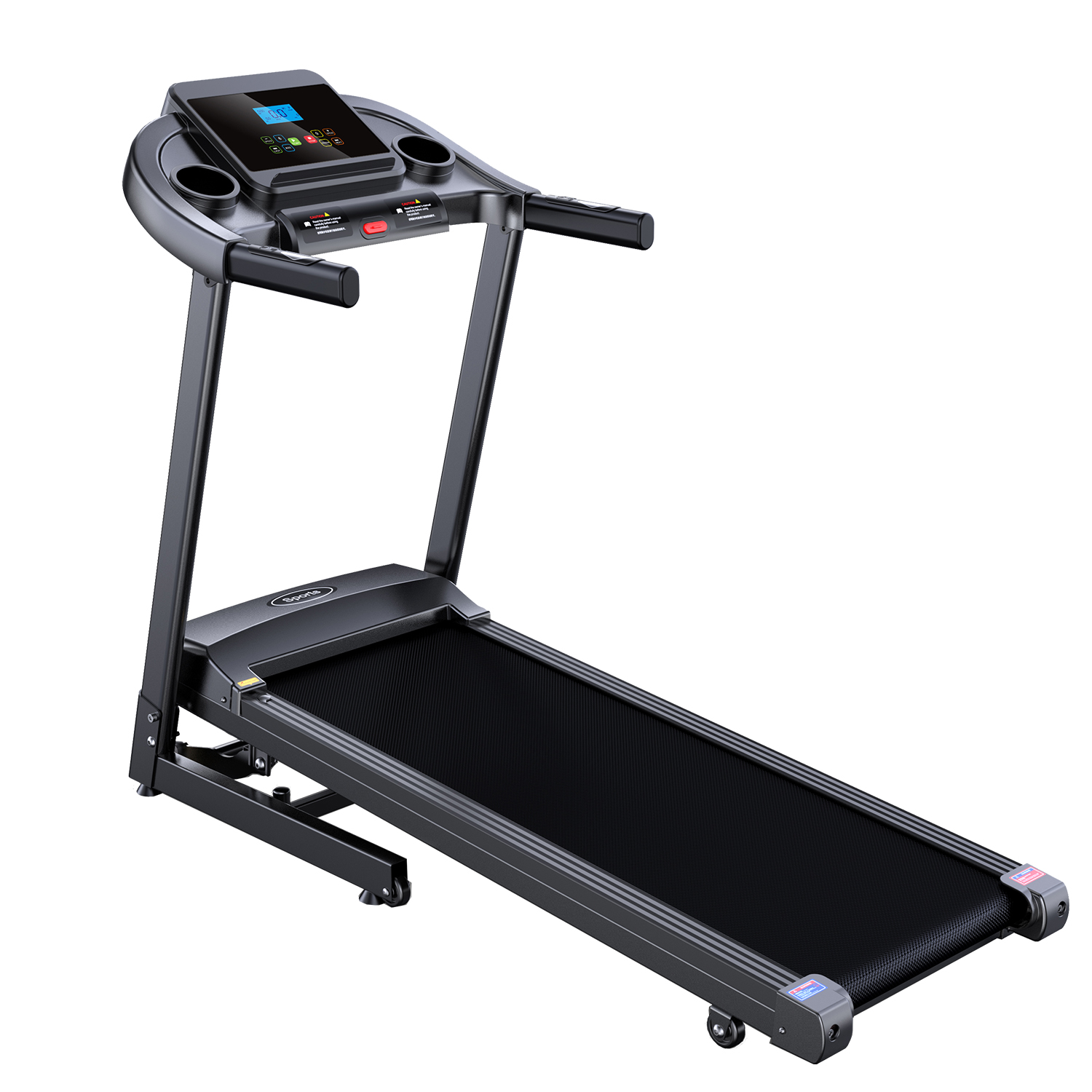
The thing about these compact units—folded down to maybe 25 centimeters thick—is that they should be container champions. But most factories treat the carton as just protection, not as a unit of measure in a larger puzzle. I’ve seen containers where the last row of boxes leaves a 15-centimeter gap at the end. Not enough for another unit, just dead space. Over a full shipment of ten containers, that adds up to nearly two entire wasted boxes of space. When you’re moving a few hundred treadmills to a distributor in Dubai or a fitness chain in Poland, that’s not just inefficient—that’s money left on the table.
Start with the Carton, Not the Container
The real optimization begins at the CAD screen in the packaging department, not at the loading dock. Most suppliers grab a standard mailer box, drop in the folded treadmill frame, slide in the console and handrails, and call it a day. But the smart ones treat the carton as a modular building block.
Take a common 2.0 HP walking treadmill. Folded dimensions might be 140cm x 70cm x 25cm. Add standard foam corners and you’re at 145 x 75 x 30—awkward for container math. But shave two centimeters off each dimension through better internal bracing, and suddenly you’re at 143 x 73 x 28. Why does that matter? Because in a 40HQ, you can now stack them five-high with a stable interlock pattern, where before you could only manage four layers with wobbly overhang. That one change nets you 36 extra units per container. Over a quarterly tender, that’s a whole container you don’t need to ship.
Material choice plays into this too. Triple-wall corrugated is bulletproof but adds 8-10mm per side. Honeycomb board might save you 3mm, but can’t handle the humidity in Southeast Asian ports. The manufacturers who get this right run climate tests in actual containers—sealed boxes sitting in Shanghai summer heat for 48 hours—to see if the packaging swells. They know that a box that gains 2mm in transit can throw off the entire load plan.
The Disassembly Tightrope
Here’s where it gets interesting. A fully knocked-down treadmill—console, posts, motor cover all separated—packs like bricks. You can fit maybe 250 units in a 40HQ. But the reassembly time at the warehouse eats into your distributor’s margins, especially in markets like Germany where labor isn’t cheap.
The sweet spot is selective disassembly. Keep the main frame and deck folded as one unit. Remove only the vertical posts and console mast, nesting them in the gap between folded decks. You lose maybe 20 units per container compared to full knock-down, but you save 40 minutes of assembly time per unit. For a mid-sized gym equipment dealer in Texas, that trade-off is worth it. They’d rather receive 220 units that can be rolling onto the showroom floor in 15 minutes than 250 units that need an hour of technician time each.
The trick is designing the hardware so those key removal points use quarter-turn fasteners instead of bolts. One supplier I work with in Taiwan redesigned their upright connection this way—saved 2mm in packaging height and cut assembly time by half. Their distributor in Riyadh now unpacks and preps treadmills in a shaded courtyard instead of needing a full workshop.
Container Choices Beyond Just Size
Most B2B buyers reflexively book 40HQs for maximum volume. But for small treadmills, a 20GP can sometimes be the smarter play, especially for urban delivery in places like Tokyo or Singapore where the final leg might involve narrow streets. A 20GP loaded with 110 units can be delivered to a downtown fitness studio without needing a massive truck crane.
High-cube containers are obvious winners—those extra 30cm of height let you go five layers high instead of four. But less obvious is the floor-loading versus pallet debate. Pallets eat up 12-15cm of height, but in damp regions like Vietnam’s coastal ports, they keep your product off potentially wet container floors. Floor loading gives you more units but requires skilled labor and increases damage risk. The best solution I’ve seen? Hybrid loading: pallets for the bottom two layers, floor-loaded stacks above that, with a thin plywood sheet in between to distribute weight. It sounds fussy, but it protects against moisture while maximizing cube.
The Mixed Load Reality
Rarely does a container hold just one SKU. A distributor in Poland might want 80 walking treadmills, 30 compact ellipticals, and a few rowing machines for a hotel project. That’s where simple “how many boxes fit” math breaks down.
The patent offices are full of algorithms for this—particle swarm optimization, genetic algorithms that treat each carton as a gene in a larger DNA strand. But on the warehouse floor, it comes down to experience and a good loading diagram. The key is starting with your heaviest, most stable base: treadmills on the bottom. Then nest the smaller elliptical boxes in the gaps between treadmill console masts. Rowing machines, with their long rails, slide vertically along the container doors. Done right, you gain 15% more product in the same space. Done wrong, you crush a console because weight wasn’t distributed properly.
What works is having your manufacturer provide not just a carton size, but a 3D load file. A simple .STEP file showing the box dimensions and weight distribution lets your freight forwarder run quick simulations. The better forwarders in Rotterdam and Hamburg do this as standard now—they’ll send you a heat map showing pressure points and gap analysis before you even commit to the load plan.
Location-Specific Considerations
Shipping to the Middle East? Those 40HQs sit in Dubai’s Jebel Ali port sun for days, sometimes weeks. Black carton ink can hit 70°C inside, softening the cardboard. Using reflective or white outer cartons isn’t just marketing—it prevents structural degradation. Plus, dust storms during unloading mean you need cartons that can be wiped clean without the print rubbing off. A matte laminate finish costs $0.12 more per box but saves face when your product rolls into a high-end Riyadh hotel gym.
For Southeast Asia’s humidity, the silica gel packets need to be beefed up—5 grams instead of the standard 2. And the load plan should prioritize air circulation. Stacking pallets tight against the container walls traps moisture; leaving a 5cm gap on each side lets the desiccants work. It’s a small detail, but I’ve seen entire container loads of electronics-grade fitness equipment arrive with corroded bolts because someone packed for dry California weather instead of tropical Singapore.
The Customs Dimension
Here’s a pitfall that has nothing to do with space: misdeclared carton dimensions. If your packing list says each box is 145 x 75 x 30cm but the customs inspector in Rotterdam measures 148 x 76 x 31, you’re flagged for discrepancies. Not a huge deal, but it triggers an inspection, which adds three days and €400 in handling fees. Multiply that across a multi-container shipment and suddenly your “optimized” load plan is costing you money.
The solution is simple but rarely done: certify your carton dimensions with a third-party measurement at the factory, stamp it on the master carton, and include that certificate in the customs docs. It’s a $50 service that saves headaches at destination. The serious importers in Germany and France now require this as part of their vendor qualification.
Beyond the Box
The best loading optimization I’ve seen wasn’t about containers at all—it was about timing. A buyer in Canada negotiated with their supplier to stagger production so that each container held inventory for both their Toronto warehouse and their Vancouver location. The load plan segregated the cartons by destination within the container, using different colored straps. When the ship docked in Vancouver, they unloaded only the back third of the container, sealed it back up, and sent it onward to Toronto. Saved on inland freight costs and got product to market two weeks faster.
That kind of thinking only happens when your supplier understands that a treadmill isn’t just a product—it’s a logistics problem wrapped in steel and plastic. The ones who get this will send you photos of the actual loaded container before it seals, provide the VGM (verified gross mass) certificate with the weight distribution map, and follow up with the discharge port to make sure your cargo isn’t buried behind someone else’s poorly loaded freight.
Post time: Dec-08-2025