

The Motor Was Fine. The Buyer Still Returned It.
A fitness equipment importer brought in a compact folding treadmill with a solid motor, a good deck and a competitive price, and the first container sold out quickly. Within two months the return rate had climbed into double digits, and almost none of the returns were mechanical: buyers complained that the console was unreadable in daylight, that the preset programmes made no sense, that the heart rate reading was obviously wrong, and that the app they had been promised in the listing did not connect. The treadmill worked perfectly as a treadmill. It failed as a product, because the part the customer interacts with every single session had been specified last and cost-reduced hardest. Electronics are the interface between your product and your reputation.
Readability First: Display, Brightness and Viewing Angle
A console specification should start with the question of whether a user can read it while running. The three variables that decide this are display type, brightness and the size of the primary speed and time numerals, and the third matters far more than the total screen size. A large screen showing six small metrics is worse than a small screen showing three large ones, because a runner at pace glances rather than reads, and a glance only registers large type. Ask the factory for the actual numeral height in millimetres for speed and time, and set a minimum in your specification. Test the sample in daylight and at an angle, not on a bench in a dim showroom.
Preset Programmes: Fewer, Better, Honest
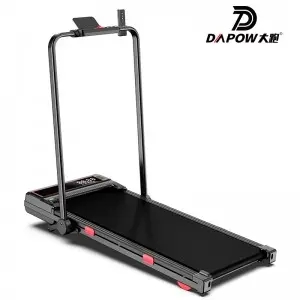
Twelve preset programmes look impressive on a specification sheet and are a common source of disappointment in use. A walking pad treadmill with fifteen levels of auto incline illustrates the better approach: a small number of meaningful functions that work well. Programmes that vary speed and incline in ways the user cannot predict feel random, and users default to manual mode within a week, at which point the programme count is pure marketing. Specify a manual mode that is easy to reach, a handful of genuine interval and hill profiles, and a clear way to override any programme instantly, and check that the programme descriptions in the manual match what the machine actually does.
Incline Control and the Failure Mode Nobody Expects
Power incline is now a baseline expectation in most home segments, and it is also a mechanical and electronic subsystem that fails. A compact auto incline treadmill with Bluetooth app readiness depends on a small motor and a position sensor, and the common faults are a deck that will not return to level and a displayed incline that does not match reality. Ask how incline position is sensed and what happens after a power interruption mid-session, because a deck stuck at fifteen percent in a small apartment is a genuine complaint rather than a technicality. Specify an automatic return to level on shutdown and test it twenty times on the sample, since intermittent faults will not show in a single demonstration.
Heart Rate: Say What It Is
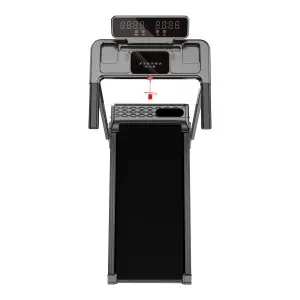
Hand grip pulse sensors are the most misrepresented feature in the category. A home treadmill with foldable armrests and heart rate monitoring will give an indicative reading, and it should be described that way. Grip sensors are not medical devices, they are inaccurate at speed and they fail entirely when the user is holding the handrail lightly or wearing gloves, and overstating them in a listing is the fastest route to a “not as described” return. Decide whether you want a wireless chest strap receiver as well, specify the protocol if you do, and write the listing copy to describe the limitation honestly. Honesty here measurably lowers return rates.
Connectivity and App Claims
Connectivity is where importers get hurt, because the claim is easy to make and expensive to support. A two in one treadmill with a vibration plate may carry Bluetooth for audio, for data, or for both, and these are different things. If the listing says the machine is app ready, the app must exist in the destination app stores, in the destination language, and must keep working for the life of the product, because a discontinued app turns a working treadmill into a complaint. Before you commit to a connectivity claim, download the app, pair it with the sample, use it for a week, and confirm with the factory in writing who maintains it and what happens if service ends.
Write an Electronics Spec and Test It Like a Customer
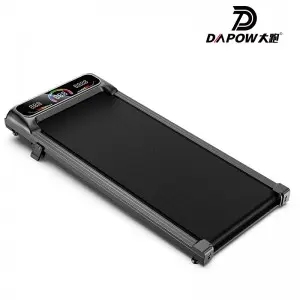
The practical conclusion is to treat the console as a specified component rather than a given. Put numeral height, display type, programme behaviour, incline return to level, heart rate honesty and connectivity support into one written specification, and require the factory to confirm each line. Then test the sample the way a customer will: in daylight, at pace, with the app running, and after a power cut. The motor will survive almost anything. It is the electronics that decide whether the customer keeps the machine.
Related Pages
- How to Choose Treadmills for Corporate Wellness Programs
- How to Source Treadmills for Amazon FBA and Online Marketplaces
- Private Label Opportunities for Walking Pads and Compact Treadmills
Post time: Oct-19-2026