

The Core Differences Between Commercial and Home Treadmills: More Than Just Price
Opening Introduction
The core differences between commercial and home treadmills are far more than just price. Many gym procurement managers, when planning their initial budget, often mistakenly believe that the core difference between commercial and home treadmills lies only in brand premium or appearance size, thus attempting to replace commercial equipment with high-end home machines to save costs. However, this short-sighted behavior often leads to motor overheating and burnout under high-intensity continuous operation, rapid wear of the running belt, and even safety accidents. The final maintenance costs and business suspension losses are far more than the initial “savings”. This article will deeply analyze the essential differences between the two in terms of motor continuous power, frame structure, and shock absorption system, helping you make wise decisions in bulk fitness equipment procurement and ensuring that every investment is converted into long-term operational stability.
1. The Truth About Motor Continuous Power: Why Continuous Horsepower (CHP) Determines Lifespan More Than Peak Horsepower (HP)?
When selecting a treadmill, the most misleading parameter is motor horsepower. Home treadmills often advertise “4.0HP peak horsepower”, which sounds powerful, but this is only instantaneous explosive power and cannot represent stability during long-term operation. The core indicator of a commercial treadmill is “Continuous Horsepower (CHP)”, which means the motor can maintain rated output without attenuation under 24-hour uninterrupted, high-load working conditions—determined by industrial-grade coil windings and independent heat dissipation air ducts.
We once witnessed a start-up chain gym purchase a high-end home series from a well-known brand to control costs. As a result, three months after opening, due to an average daily usage time of more than 12 hours, 30% of the machines experienced severe motor carbon brush wear and controller overheating protection shutdowns, forcing a full replacement with a direct loss of hundreds of thousands of yuan—this is a common pitfall in commercial treadmill selection.
Common Purchaser Question: If my gym is small with low foot traffic, can I make do with a high-power home machine?
The answer is no, because the “high-frequency start-stop” and “alternating use by users of different weights” in commercial scenarios have a far greater impact on the motor than the regular use in home environments. In the commercial treadmill selection guide, please ignore peak data and focus closely on the CHP value (usually 3.0 CHP or more for commercial use). This directly determines whether your equipment can pass the peak test of the first operational year and avoid becoming a nightmare for the after-sales department.
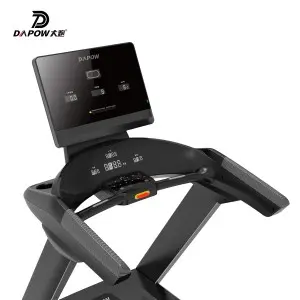
2. Analysis of Frame Structural Rigidity: How to Resist High-Intensity Vibration and Deformation Through Steel Material?
In addition to the motor (the heart), the frame structure (the skeleton) is another dividing line between commercial and home treadmills, directly related to the equipment’s noise reduction effect and safety factor under long-term high load. To pursue portability and folding functionality, home treadmills mostly adopt thin-walled steel pipe welding, with a load-bearing limit usually between 120-150 kg, and are prone to metal fatigue and abnormal noise after long-term operation.
In contrast, commercial models use thickened rectangular steel pipes integrally formed, with a self-weight often exceeding 180 kg, designed specifically to withstand the impact of high-speed running by users over 150 kg. An employee activity center of a large enterprise once purchased a batch of lightweight folding treadmills, which led to two user falls due to cracked welds at the frame connections within six months. This not only resulted in huge compensation but also seriously damaged the company’s image—this is the risk of neglecting frame rigidity in gym equipment wholesale.
Common Question: Does a heavy frame mean taking up too much space and being difficult to move?
Modern commercial design has solved this pain point by optimizing center of gravity distribution and adding industrial-grade transport wheels. Although non-foldable, it is still flexible to push and move. In gym equipment wholesale decisions, choosing a high-rigidity frame is not just buying a machine, but a “zero-deformation” safety commitment. It allows users to sprint at full strength without worrying about shaking under their feet, thereby improving member retention and satisfaction.
3. The Secret of Shock Absorption System Comfort: How to Use Professional Cushioning Technology to Reduce the Risk of User Joint Injury?
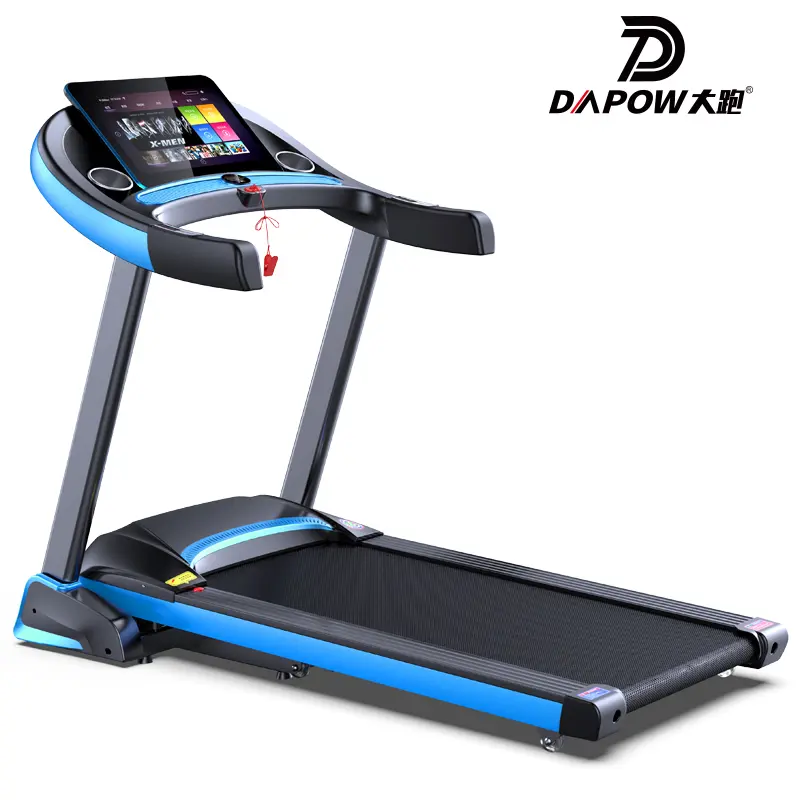
The shock absorption system is the key to reflecting humanistic care and professionalism. Home treadmills mostly use simple rubber pads or spring cushions, which feel soft initially but tend to collapse and fail over time, causing impact force to directly react on the user’s knees. Commercial treadmills are equipped with precisely calculated suspended shock absorption or multi-layer composite cushioning decks, which can automatically adjust rebound force according to the user’s weight, effectively absorbing up to 40% of the ground reaction force and simulating the feel of a plastic track.
Data shows that gyms with professional commercial shock absorption systems have a 65% reduction in member complaints about “knee pain” or “calf soreness”, significantly extending the user’s exercise life cycle—this is a key advantage of commercial fitness equipment.
Common Question: Can ordinary users really perceive the pros and cons of the shock absorption system?
The answer is yes, especially in the later stages of long-distance running training. High-quality shock absorption can make users clearly feel lighter steps and more stable landing. This subtle difference in experience is often the key to high-end member renewal. In high-end treadmill procurement strategies, do not ignore the matching process of the deck and running belt. Only commercial equipment with truly medical-grade cushioning effect can help your end customers run faster, farther, and longer.
Conclusion
From the continuous endurance of the motor to the steel will of the frame, and the gentle care of the shock absorption system, the core differences between commercial and home treadmills run through the design philosophy and manufacturing standards of every component. For B2B purchasers, recognizing these differences is not to blindly pursue high prices, but to match real commercial operation scenarios and avoid potential operational risks. We hope the in-depth analysis in this article can provide solid theoretical support for you in building a high-quality fitness space, allowing you to accurately lock in commercial fitness equipment that can truly stand the test of time in the complex market, and achieve a win-win situation of commercial value and social benefits.
FAQ (High-Frequency Industry Questions)
Q1: Is a Light Commercial treadmill suitable for small boutique studios?
A: Light commercial models are between high-end home and full commercial models, suitable for small studios or hotel gyms with an average daily usage time of 4-6 hours and no more than 1 hour of continuous operation at a time. However, if you plan to expand the scale or extend business hours in the future, it is recommended to directly choose full commercial models, as they have a higher residual value and better recognition in the second-hand resale market, making them more cost-effective in the long run.
Q2: What should be the maintenance frequency of commercial treadmills? Which parts are the key checks?
A: It is recommended to perform in-depth maintenance once a month, focusing on checking whether the running belt tension is centered, the wear condition of the motor carbon brushes (usually replaced every 2000 hours of operation), and the state of the lubricating plate oil film. In addition, the frame bolts need to be tightened once a quarter to prevent loosening due to long-term vibration. Establishing a preventive maintenance file can reduce the equipment failure rate by more than 80%—this is a key tip for commercial treadmill maintenance.
Q3: How to verify the authenticity of the “commercial-grade” configuration claimed by the manufacturer during procurement?
A: Do not judge only by the brochure. Ask the manufacturer to provide a continuous operation test report issued by a third-party laboratory (such as 72 hours of continuous operation without failure) and check the brand and model of key components (such as the motor and drive board). The most intuitive method is to test the machine on-site: let a heavier experiencer run continuously at 15km/h for 30 minutes, touch the temperature of the motor cover, and listen for abnormal noise from the frame. The real performance will not lie—this is a practical method for high-end treadmill procurement strategies.
Meta Description
In-depth analysis of the core differences between commercial and home treadmills, revealing the essential differences in motor CHP, frame rigidity, and shock absorption systems. Help fitness equipment purchasers avoid selection pitfalls and build a highly durable commercial space. Get professional selection advice now!
Core Keywords
core differences between commercial and home treadmills, commercial treadmill selection guide, gym equipment wholesale, high-end treadmill procurement strategy, commercial fitness equipment
Post time: Mar-13-2026