

For serious runners, a suitable treadmill is not only a fitness tool but also a core partner for daily training and breaking through bottlenecks. Especially when the weather is restricted or time is tight, whether the treadmill can meet the demands of high-intensity and long-duration training directly determines the training effect. The key to choosing a treadmill suitable for serious training lies in several core configurations – horsepower, running belt, stability, and ergonomic detail design. These are all core criteria for measuring whether it can support professional training.
The first thing to focus on is the continuous horsepower of the treadmill, which is the “heart” that supports serious training. Many people tend to confuse peak horsepower with sustained horsepower. For serious runners, only sustained horsepower has practical reference value. Peak horsepower only represents the maximum power that a treadmill can reach instantaneously and cannot support long-term high-intensity operation. The sustained horsepower reflects the output capacity of the treadmill’s motor in a stable state and directly determines whether it can withstand long-term long-distance running, interval running and other training. Generally speaking, for ordinary fitness needs, a treadmill with a continuous horsepower of 1.5 to 2.0HP is sufficient. However, for serious training, it is recommended to choose a model with a continuous horsepower of no less than 2.5HP. For runners who are overweight (over 80kg) or frequently engage in long-distance running training for more than one hour, a continuous horsepower of 3.0HP or above is more reliable. It can effectively prevent problems such as motor overheating and operation lag, ensuring the continuity of training.
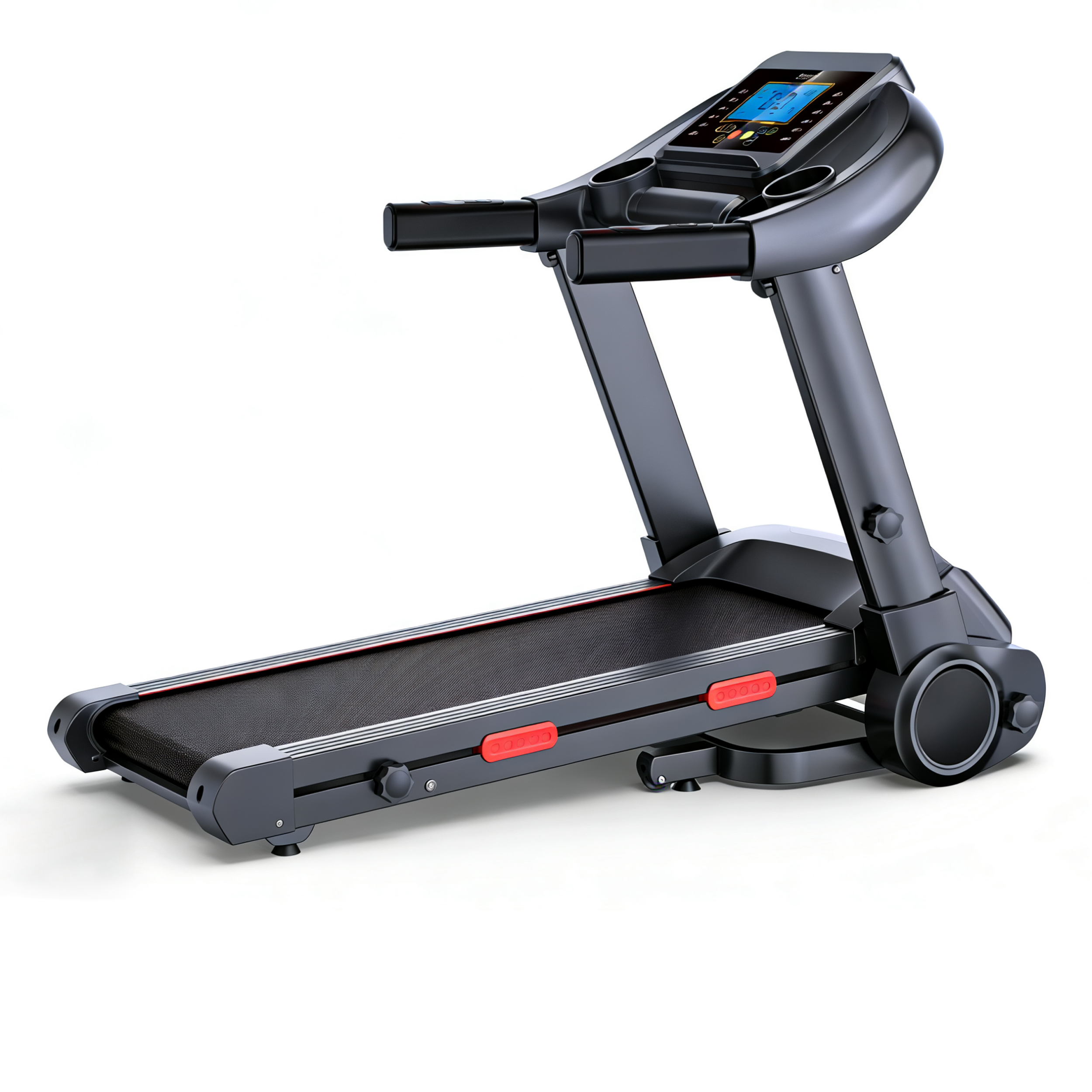
Secondly, the size of the long-distance running belt is a key factor influencing the training experience, especially crucial for the large-scale movements of serious runners. The length of the running belt on a regular household treadmill is mostly between 120 and 130cm, and the width is between 45 and 48cm. Such dimensions are sufficient for daily walking and short jogging, but they are hard to meet the needs of serious runners. During serious training, runners’ stride length will significantly increase, especially during sprints or long-distance running. A too short running belt can easily lead to unstable landing and even the risk of missing a step. A too narrow running belt will restrict body movement and affect the standardization of running posture. Therefore, for treadmills suitable for serious training, the length of the running belt is recommended to be no less than 140cm and the width no less than 50cm. A more spacious running belt allows runners to fully stretch their bodies, maintain a natural running posture, and reduce fatigue and safety hazards caused by limited space. This is also the core reason why commercial-grade treadmills generally adopt large-sized running belts.
Apart from horsepower and running belts, the stability of a treadmill should not be overlooked either. Serious training is often accompanied by high-intensity interval running, uphill running, etc., and these training methods can exert a considerable impact force on the treadmill body. If the stability of the device body is insufficient, problems such as shaking and abnormal noises are likely to occur during running, which not only affects the training experience but may also increase the risk of sports injuries. The key to judging the stability of a treadmill lies in the weight of the body and the material of the frame. Generally, treadmills with a body weight of over 80kg will have better stability. Models with thickened steel frames can better withstand the impact force brought by high-intensity training and extend the service life of the treadmill. For scenarios where group training is frequently conducted or the device is used at a high frequency, a stable body structure is an indispensable core advantage.
In addition, the shock absorption system is also a key detail that serious runners need to consider when choosing a model. Training on a treadmill for a long time will subject the joints to certain impact forces. A high-quality shock absorption system can effectively buffer such impact forces and reduce damage to joints such as knees and ankles. This is particularly important for runners who need to persist in training for a long time. A good shock absorption system is not merely “soft”, but rather it can provide appropriate cushioning when runners land and quickly rebound when they lift their feet, maintaining the rhythm of running. The current mainstream shock absorption technologies include silicone shock absorption, airbag shock absorption, and suspended shock absorption, etc. Different shock absorption methods have their own advantages, but the core is all to balance the buffering effect and the running experience, and to avoid poor power generation during running due to excessive shock absorption.
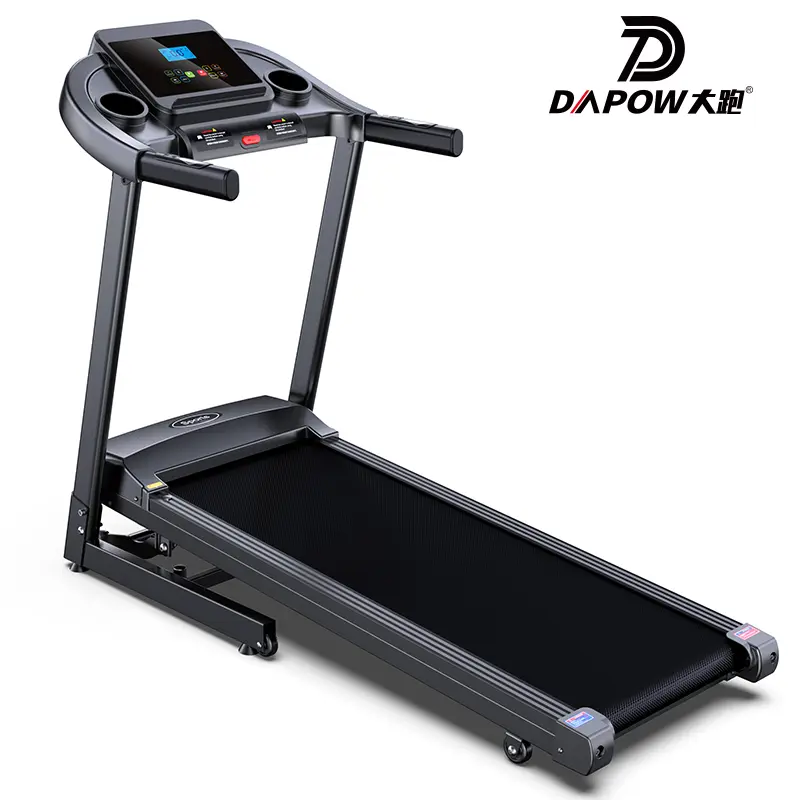
Finally, noise control is also a point that cannot be ignored. Serious training often requires running the treadmill for a long time. If the noise is too loud during operation, it will not only affect one’s own training state but also may disturb others. High-quality treadmills can keep the operating noise within a reasonable range by optimizing the motor structure and using silent running belt materials. Even during high-intensity indoor training, they will not cause obvious noise pollution. This is an important plus point for scenarios such as home training and studios.
In conclusion, the core of a treadmill that can meet the needs of serious training lies in being “sufficient, durable and easy to use”. Sufficient continuous horsepower, spacious running belt size, stable body structure, high-quality shock absorption system, along with excellent noise control, these configurations together form the foundation of professional training. For runners who are dedicated to enhancing their training outcomes, choosing a treadmill that meets these standards can make every training session more valuable and provide a solid guarantee for performance breakthroughs.
Post time: Dec-16-2025