

A German e-commerce seller listed the same narrow-belt treadmill in both Germany and the United States. In Germany the return rate sat at a calm 4 percent; in the United States it climbed to 14 percent. The machine was identical, but the buyers were not: American users were taller and heavier on average, with a longer stride that ran off the short belt. The seller had treated belt size as a footnote, and it became the most expensive line on the returns report.
Belt Width Tiers and Who They Fit
Belt width sets how stable a runner feels. The market splits into three practical bands. A narrow belt near 40 cm suits walkers and compact apartments. A mid belt of 42 to 45 cm fits most home joggers. A wide belt of 48 to 50 cm or more is the comfort zone for larger users and commercial gyms where strangers of every size step on. Sellers who import one narrow size for every region routinely see the highest return rates in markets with larger body types, because the running surface simply does not match the user. Importers should therefore stock width tiers, not a single belt, for mixed markets.
Belt Length, Stride and Height
Length decides whether the foot lands on the belt or the floor. Typical decks run 110 cm for walkers, 120 cm for average runners, and 130 to 140 cm for tall or fast users. A simple field rule for stride is roughly 0.4 times the user height per step, so a 180 cm user needs far more belt than a 160 cm user. A belt that is too short forces the runner to shorten the stride, which feels unnatural and pushes the foot toward the rear edge where the belt meets the frame. Tall users in the 190 cm range need the longest decks or they will drift off the back. Pair length with speed: the higher the top speed, the longer the running area must be, because the foot travels further at pace.
Step-Up Height for Seniors and Apartments
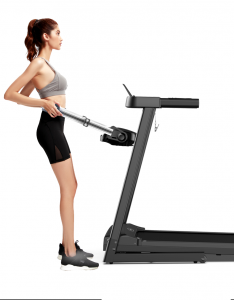
The deck height, or step-up height, is the distance from the floor to the walking surface. It is easy to ignore until an older buyer cannot mount the machine, or an apartment dweller cannot store it under a low shelf. Keep step-up height low for senior and small-home markets, and state it plainly in the listing so the right buyer self-selects. A low step-up height also helps users with limited mobility step on safely.
The DAPOW B8-4010 home fitness treadmill is built around a balanced home belt size.
Roller Diameter and Belt Thickness
Durability tracks two numbers. The roller diameter sets how gently the belt bends at each turn; larger rollers mean longer belt life. Belt thickness comes in 1.6 mm for light use, 1.8 mm for regular home use, and 2.0 mm or above for heavy or commercial duty. Thicker belts resist stretching and edge wear, but they also add weight and cost. Match belt thickness to the expected user weight, not to the showroom feel.
Cushioning and Deck Thickness
Shock absorption depends on the deck thickness and the elastomer pads under it. A thicker deck with tuned cushions protects knees on hard floors and reduces noise through apartments, a selling point for city buyers. City buyers in particular weigh cushioning heavily, because downstairs neighbors hear every hard step. Do not let cushioning hide a short belt; comfort cannot fix a surface that is too small.
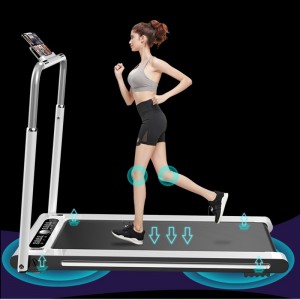
The foldable electric home treadmill targets the space-saving home gym segment.
Recommendation by Height and Weight
- Up to 170 cm and 75 kg: 40 to 42 cm wide, 110 to 120 cm long belt.
- 170 to 185 cm and 75 to 95 kg: 45 cm wide, 120 to 130 cm long belt.
- Above 185 cm or 95 kg: 48 cm or wider, 130 to 140 cm long belt.
Market Preferences Differ by Region
The same physical size is not the same commercial choice everywhere. North America prefers wide, long belts for larger users and higher speeds. European city buyers want compact, foldable machines that disappear into small flats. Asia-Pacific apartment dwellers lean toward short walking pads for daily steps. The mistake is to assume one global spec will satisfy all three, when the body sizes and living spaces are nothing alike.
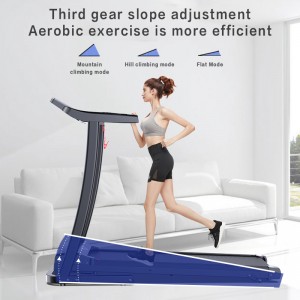
The new foldable walking pad treadmill answers the city and apartment demand.
The mini electric walking pad covers the smallest footprint segment.
The DAPOW B8-400 walking pad treadmill is the value option in the compact range.
Belt Size Also Drives Freight
A wider, longer deck adds carton volume and raises ocean and last-mile freight per unit. The sizing decision therefore touches landed cost, not only comfort. Two machines with the same motor can ship at very different cost once the decks differ. Quote the package dimensions alongside the running surface so the margin math stays honest.
Size Fields Every Listing Must Show
State these clearly so the buyer self-selects: belt width, belt length, step-up height, roller diameter, belt thickness, top speed, and folded size. The conclusion is direct: belt size is one of the parameters that decides the return rate, so never leave it in the last-row parentheses of the spec sheet. Size the running surface to the market, print it on the listing, and the returns will tell the difference.
Related Pages
- How to Choose Treadmills for Corporate Wellness Programs
- How to Source Treadmills for Amazon FBA and Online Marketplaces
- Private Label Opportunities for Walking Pads and Compact Treadmills
Post time: Oct-23-2026