

Your treadmill catalog ships 200 units a month, but the buyer who asked about adding an inversion table just cancelled because a competitor’s return rate scared them off. Adding an inversion table to a treadmill range looks like an easy basket-size win, until a 12% fitness equipment return rate on the new SKU eats the margin on 40 treadmill sales. The risk is not the product itself; it is stocking it without the safety verification that keeps it from coming back in a box.
Why returns spike when a treadmill brand adds inversion tables
Returns spike because the customer who buys a treadmill is fit-minded, while the customer who needs an inversion table is often managing back pain and reads the manual far more carefully. A missing warning, a loose ankle strap or an unclear weight limit turns a helpful recovery product into a returns-counter complaint. Skip the verification step and a single social post about a failed locking pin can pull 30-50 units back across the whole range within a month. Recommend running the new category through the same incoming inspection your treadmills already pass, instead of trusting the supplier’s summary sheet.
What should the first sample batch actually prove?
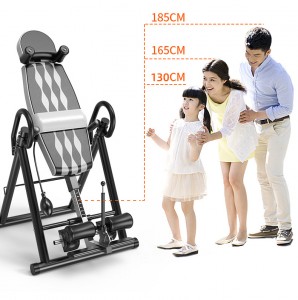
For a home spinal decompression model, the DAPOW 6304 premium back inversion therapy table for home spinal decompression is the unit to request as your first pre-production sample.
The first batch should prove three things before a single unit reaches a warehouse: the frame holds load, the lock engages every time, and the ankle system fits the bodies your customers actually have. Order 3-5 pre-production samples rather than one, because a single unit can hide a tooling drift that shows up on unit 40. The annotation buyers skip is that a static load test means holding 1.5 times the rated weight for 24 hours, not a quick bounce on the showroom floor. Ask the supplier for a third-party inversion table safety test report that records both the static load and a 10,000-cycle rotation test before you approve the tooling.
How do you verify the locking pin and ankle fixation?
The locking pin is the one component that must never slip, so verify it on every sample, not on a random pull from the container. Press the pin into its seat 50-100 times during inspection and confirm it returns to the same locked position without wobble. A pin that needs a second hand to seat properly will fail in a customer’s hallway, and that failure is the return reason buyers quote most often.
The ankle fixation should adjust across the 5-12 positions your size range needs and hold a 90-110 kg user without sliding. Require a load test record for the ankle system at the top of its adjustment range, where most designs loosen first. A heavy duty inversion table for a gym faces more daily cycles than a home unit, so the pin check matters even more there.
For a commercial-grade build, the DAPOW 6317 heavy duty deluxe inversion table for commercial gym use should be the second sample you put through the same pin and ankle checks.
Which load rating matches the customers who actually buy?
The rated load on the box is rarely the load your real customers weigh, so match the rating to the body, not to the marketing number. Most home buyers sit between 60 kg and 100 kg, yet many tables are stamped at 150 kg, a gap that hides a frame tuned for showroom demos rather than daily use. List a 150 kg rating while the frame flexes at 110 kg and you invite the exact return you are trying to avoid, plus a safety complaint.
Set the published rating 10-15 kg below the verified failure point so the everyday user never approaches the edge. The protective belt inversion table exists for exactly this reason, giving a second retention path for heavier or less mobile users.
For that safer build, the DAPOW 6316 inversion table with protective belt support for safe exercise carries the extra belt retention you should test alongside the standard model.

What the instruction manual and packaging must carry
A treadmill importer already knows the manual is a legal and returns document, not a courtesy, and the inversion table needs the same discipline. Print the warnings in the language of the market, not only in the factory’s default English, because a mistranslated limit is the root of most injury returns. Ship a manual that only shows the assembled product and omits the 6-8 assembly steps, and 1 in 4 customers will rebuild it wrong and send it back. Require the supplier to provide a third-party test report alongside the manual draft, so the warnings match the tested limits rather than a guess.
How the new table strengthens the treadmill range you import
The inversion table is not a distraction from the treadmill business; it is a recovery product that the same home-gym buyer reaches for after a run. Stocking both lets a single listing serve one home fitness equipment buyer who wants cardio and spinal relief in the same room.
For the cardio side, the DAPOW heavy duty commercial treadmill for gym floor use is the machine whose buyers most often ask the store for a matching inversion option.
Pick an inversion table supplier who will hand over the test records without a fight, because that cooperation predicts the returns rate more than any brochure. A 2-in-1 unit widens the entry price without adding a second supplier relationship to manage.
The DAPOW 2438 402A 2 in 1 treadmill with vibration plate for home cardio pairs the walking deck with a vibration plate that sits in the same recovery conversation as the table. Keep the two categories on one inbound inspection so the recovery equipment range shares one returns playbook instead of two.

A first-batch verification checklist before you stock
Before you convert the sample approval into a 300-500 unit first order, walk a written checklist so nothing slides from “looked fine” to “came back”. The checklist is short on purpose, because a 20-line form gets skipped on a busy receiving dock.
- One static load test record showing 1.5 times rated weight held for 24 hours, from a third-party lab.
- One locking-pin check across 50-100 seat cycles on every sample, not a single pull.
- One ankle-system load record at the top of the 5-12 adjustment range.
- One manual in the market language with the 6-8 assembly steps illustrated.
Tick all four and the first container is far more likely to reach the customer than the returns counter.
The verdict for a treadmill importer adding the category
The buyer who cancelled over a scary return rate was reacting to a category bought blind, not to a category bought verified. Book the samples, run the four checks, and the inversion table becomes the recovery product that lifts the treadmill range instead of dragging its margin into the red.

Related Pages
- How to Choose Treadmills for Corporate Wellness Programs
- How to Source Treadmills for Amazon FBA and Online Marketplaces
- Private Label Opportunities for Walking Pads and Compact Treadmills
Post time: Nov-04-2026