

2026 Europe High-End Fitness Equipment Market Report: 3 Growth Tracks Dealers Must Seize
As a “veteran” with 15 years of experience in the treadmill and fitness equipment industry, the most troublesome thing for me every year is helping customers predict “what will sell well next year”. Especially since the beginning of this year, I have clearly felt that more dealers are consulting about the European market—their questions are no longer just “can the price be lower”, but “what is really lacking in the European high-end fitness equipment market now?”
Just last month, an old Polish customer complained to me: he had just imported a batch of standard commercial treadmills, only to find that the newly opened premium studios in the local area didn’t even look at them. Because those compact gyms wanted small equipment with a “digital soul”, not clunky “iron blocks”. This is actually a true portrayal of the European market in 2026: the money is still there, but the flow direction has changed.
This report doesn’t beat around the bush. Combining the latest industry data released in March 2026, I will break down the 3 growth tracks that dealers must seize, especially for treadmills, the core category, and tell you where to distribute goods and how to promote them.
Track 1: Compact Commercial Equipment – Seize the Explosive Dividend of “Community Gyms”
If you are still promoting the traditional commercial treadmill matrix that covers 20 square meters to European customers, you may be rejected.
The most significant change in the European fitness market in 2026 is: “big box” gyms are on the decline, while small community convenience store-style studios (200-500 square meters) are on the rise. In Eastern European cities like Warsaw and Prague, venues like “Active Zone” that are located on street corners and focus on 30-minute quick training can be seen everywhere.
What does this mean for treadmills? Space utilization and plug-and-play digital capabilities.
Key Procurement Pain Points for Dealers:
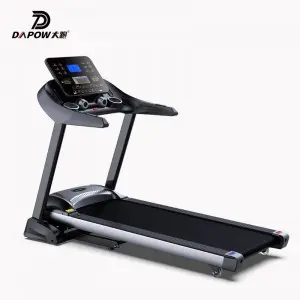
The owners of these small venues will not hire full-time IT engineers. The treadmills they need must first be small in size but with a non-short running belt (user foot feel cannot be compromised), and second, they must be able to connect to the Internet quickly. Imagine this scenario: users scan a QR code to log in, their training plans in the APP are directly synchronized to the treadmill screen, and the coach adjusts the speed in real time by watching the heart rate in the background. This “light asset, heavy experience” model is the mainstream in 2026.
Real Industry Data:
According to data from January 2026, the gym membership penetration rate in the Polish market is only 9.5%, while in Sweden it is as high as 25%. The gap between them is entirely filled by this “convenient” fitness model. Eastern Europe is replicating Western Europe’s fitness habits, but skipping “large and comprehensive” and directly moving towards “small and beautiful”. Our dealers in Eastern Europe reported that in the second half of last year, inquiries for foldable commercial treadmills with intelligent interactive systems doubled.
Common Customer Question: “My customers are small studios with limited budgets but want a high-end feel. What should I do?”
My suggestion: Don’t promote full-featured top flagship models. Choose mid-range models with reserved interfaces—for example, models with unchanged basic motor configuration but reserved heart rate monitoring and APP screen casting functions. This way, they can save costs now and only need software unlocking for future upgrades, without changing hardware.
Track 2: High-End Residential and Hotel Supporting – Sell Treadmills into “Non-Fitness Channels”
This track is easily overlooked by many dealers, but it is precisely the most profitable “hidden cake”.
In 2026, the application scenarios of luxury commercial treadmills have long exceeded gyms. In high-end apartments in Paris and Milan, a gym is a necessary “presentable” supporting facility; in luxury hotels in Dubai and Cannes, the treadmills by the swimming pool must be design pieces, not just equipment. Who are these buyers? Developers, hotel management groups, and interior designers.
How to Seize This Cake?
You have to learn to sell treadmills in their language. When facing hotel buyers, don’t say “motor power 3.0HP”, but say “this equipment can seamlessly connect to the hotel’s intelligent guest room system, allowing guests to book and set treadmill parameters in their rooms”.
Practical Case:
In 2025, we assisted a high-end hotel supplier in Germany to win an order from a design hotel in Iceland. The requirements were extremely demanding: it had to be quiet (not disturbing the spa area downstairs), able to withstand extreme humidity changes (next to the hot spring), and the control panel had to be as simple as Nordic furniture. Finally, we recommended a fully enclosed design model, canceling fancy buttons and replacing them with a monochrome OLED screen. The hotel manager later feedback that guests specifically mentioned in their reviews that “even the gym is as beautiful as an exhibition hall”. This is differentiated value—you are not selling a treadmill, but an “overall experience solution”.
Value Data Support:
According to Verified Market Research, the proportion of high-end residential and hotel channels in the luxury commercial treadmill market is growing at a rate of more than 7.5% per year. Especially models with a unit price of more than 5,000 US dollars are becoming more and more common in tender purchases.
Track 3: Home Rehabilitation and Healthy Aging – “Longevity Economy” Spawns Specialized Equipment
This is the most explosive track in the next five years in my opinion, and it also tests the professionalism of suppliers the most.
Europe is experiencing profound aging, but this generation of elderly people is not as “shaky” as we imagine. They have money, leisure, and attach great importance to “longevity”. In Germany and Northern Europe, the demand for medical-grade home treadmills is spilling over from rehabilitation centers to private residences.
Product Upgrade Directions:
Ordinary home treadmills cannot meet their needs. What they want is:
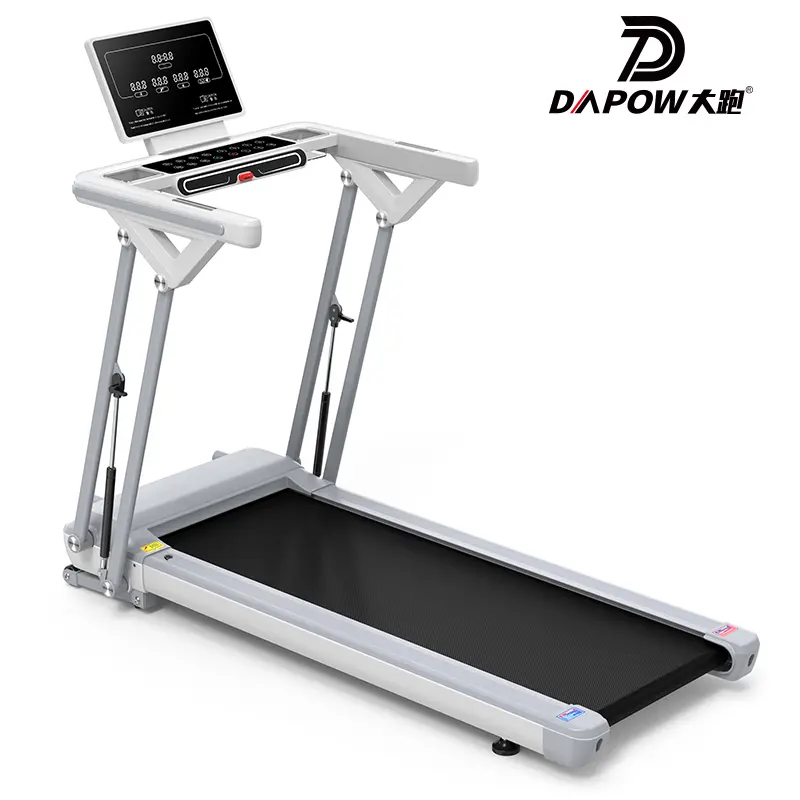
- Extremely low entry threshold: Low step height to prevent tripping.
- Medical-grade safety configurations: Extended and thickened armrests, and even systems equipped with emergency braking and automatic slow shutdown.
- Passive rehabilitation functions: Not just running, but also passive stretching functions with incline walking, and even simulating complex road conditions for gait training.
Real Demand Scenario:
I know an orthopedic doctor in Munich who runs his own physical therapy clinic and provides “home rehabilitation programs” for high-end clients. He told me that many patients who have undergone knee replacement surgery do not need to lie down after being discharged from the hospital, but need low-impact walking training under the doctor’s remote monitoring. At this time, if a treadmill can synchronize data such as gait symmetry and contact time to the physical therapist in real time, it is no longer just equipment, but part of the treatment plan.
Key Data:
The World Health Organization points out that one-fifth of adults worldwide need some form of physical rehabilitation in their lives. While the growth of the commercial gym market is slowing down to 2%-3%, the home and medical rehabilitation segments are quietly growing at a double-digit rate. For treadmill OEM/ODM manufacturers, adding one or two medical-grade interfaces may be the key to entering this high-barrier, high-profit market.
2026 Procurement Pitfall Guide: Don’t Be Deceived by Data
After talking about opportunities, I must remind you. When looking at the European market, you can’t just look at the total volume.
The estimated sales volume of the entire European fitness equipment market in 2026 is about 16.26 billion US dollars, which looks attractive, right? But you have to pay attention to the upside-down price structure.
At present, the average price of equipment exported by the EU is about 8,000 US dollars/ton, while the average import price is only 4,900 US dollars/ton. This data clearly tells us: Europe’s local market is enjoying high-end profits, and the space for low-end assembled goods is being squeezed. If you are still competing with “50% cheaper for the same model”, the road will only get narrower and narrower.
What are smart dealers doing now? They are taking advantage of Europe’s disadvantage in production costs. For example, although Italy and Germany have powerful manufacturing plants, they lack flexible customization capabilities. You may not be able to make the running belt have a “floating feeling” like Woodway, but you can deliver customized color commercial series in 3 months, while local European factories may take 8 months.
FAQ – Common Questions from Dealers
1. Q: Now entering the European market, which country is the safest to focus on?
A: If you are doing high-end commercial business, focus on the chain brand renewal needs in Germany (annual consumption of 96,000 tons) and France (64,000 tons). If you are doing home intelligent products, Poland and Eastern Europe are good springboards—here, growth is fast, acceptance of new brands is high, and the market is shifting from “pure low price” to “pursuing quality”.
2. Q: E-commerce channels are so easy to do, can I just open an Amazon store?
A: It depends. For small B2C home equipment, yes, but never do this for B2B commercial equipment. The procurement process for commercial customers is “inquiry – sample testing – factory inspection – signing maintenance agreement”. You are just a catalog online. The real profitable big orders are always cooperated with local professional dealers or integrators. They are responsible for installation, after-sales and lease financing, and you are responsible for providing competitive products.
3. Q: In addition to CE certification, what other mandatory requirements do I need to pay attention to in Europe now?
A: You must pay attention to sustainability. In 2026, tenders often ask: “How much recycled steel is used in your products?” “Is the packaging plastic-free?” “Can you provide carbon emission data?” This is no longer a public relations gimmick, but a qualification certificate for entry. If your treadmill can prove that it is 15% more energy-efficient than competitors, or that the motor has a longer life to reduce electronic waste, in the eyes of European buyers, this is worth a 5% premium.
Final Words
The European market in 2026 is experiencing a profound “value return”. People are still willing to spend money on health, but they have become more demanding. What they want is no longer a cold treadmill, but a partner that can integrate into the living space, connect to the digital ecosystem, and truly manage health.
For our B2B customers, whether they are brand owners or channel partners, seizing the three tracks of compact commercial, high-end supporting, and rehabilitation medical care, and telling good stories of “intelligence” and “sustainability”, this round of industry reshuffling is your best opportunity to seize market share.
Optimized Meta Description (Google-Friendly)
2026 Europe High-End Fitness Equipment Market Report Released! Based on the latest industry data, it analyzes three key growth tracks for treadmill dealers: compact commercial, high-end supporting, and home rehabilitation. Avoid low-price traps, seize the dividends of intelligence and sustainability, and help you accurately layout the German, French and Eastern European markets.
SEO-Optimized English Core Keywords
Europe high-end fitness equipment market, commercial treadmill procurement, home smart treadmill, fitness equipment overseas, Europe market access, 2026 fitness trends, compact gym equipment
Post time: Mar-19-2026