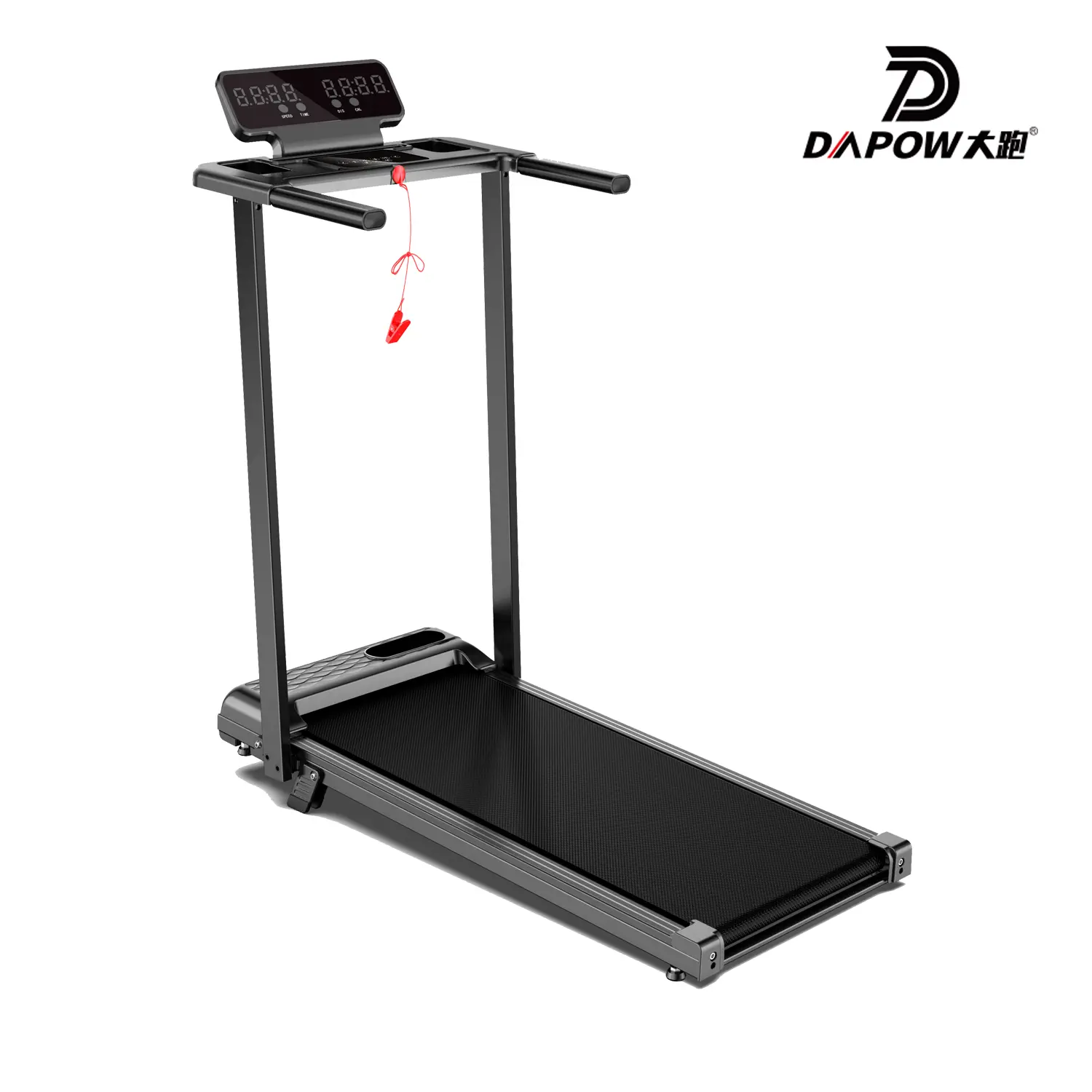
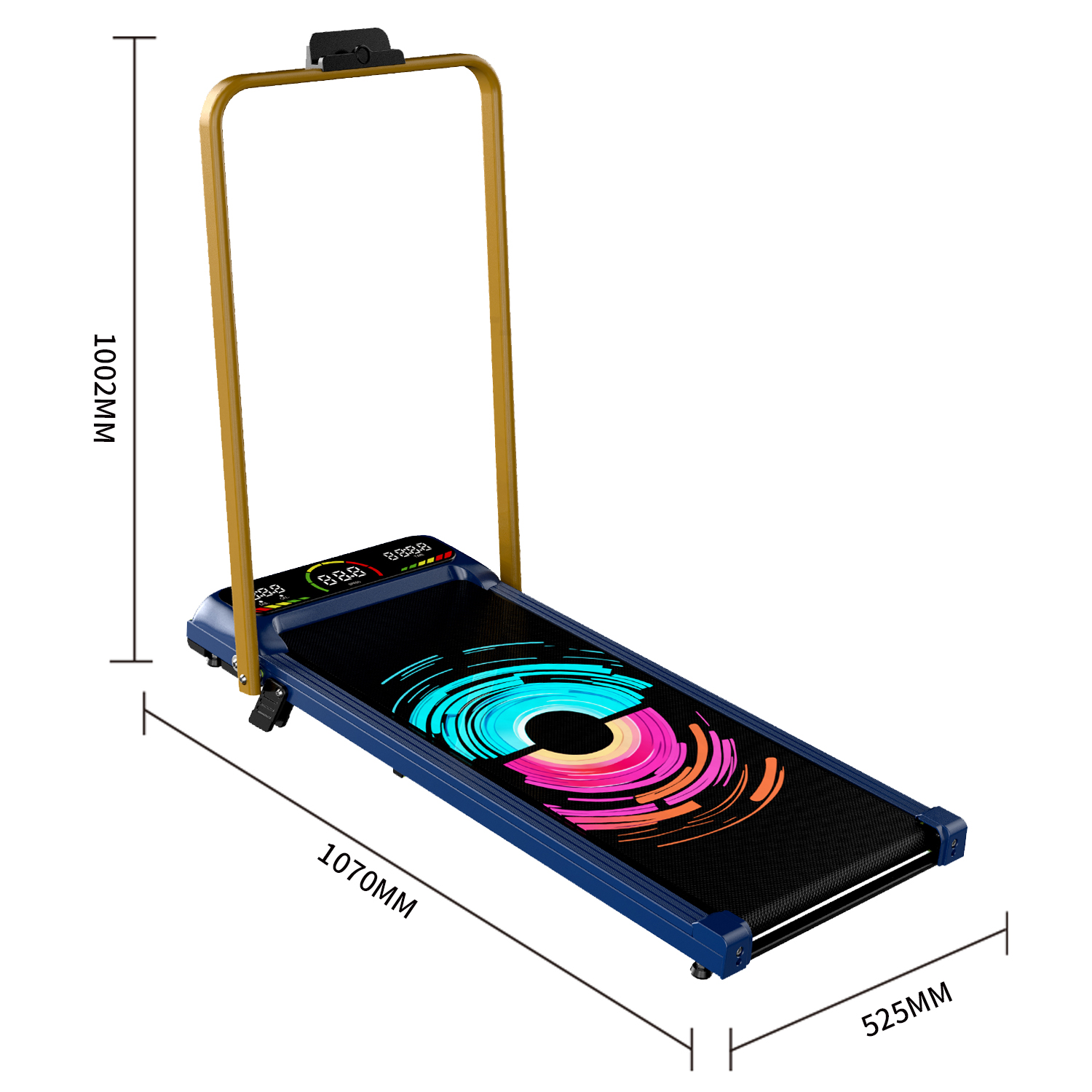
2-in-1 Folding Walking Pad with Armrests Procurement Logic for Asian Fitness Equipment Importers: Balancing Portability and Practicality
Asia’s home fitness market has become a core incremental market for global fitness equipment consumption, driven by high population density, prominent small-unit housing characteristics, and a surge in home fitness demand among office workers. The 2-in-1 folding walking pad with armrests has emerged as a key procurement category for Asian fitness equipment importers, perfectly aligning with Asian consumers’ home fitness needs through its dual walking/jogging mode design, foldable portability, and safe practicality brought by armrests. For importers, the core procurement logic is not to pursue a single low price or functional stacking, but to strike a precise balance between portability and practicality, while adapting to regional market characteristics, consumer preferences, and certification standards across Asia. This article will conduct an in-depth analysis of the core procurement dimensions, regional differentiated preferences, quality control requirements, and supply chain adaptation strategies of 2-in-1 folding walking pads with armrests from the demand orientation of Asia’s home fitness market, providing professional procurement references for Asian fitness equipment importers.
Table of Contents
- Core Demand Orientation of Asia’s Home Fitness Market for Walking Pads
- Core Product Value and Market Adaptability of 2-in-1 Folding Walking Pads with Armrests
- Core Procurement Dimension 1 for Importers: Quantitative Assessment and Design Requirements of Portability
- Core Procurement Dimension 2 for Importers: Full-Scenario Adaptability and Functional Standards of Practicality
- Differentiated Procurement Preferences for 2-in-1 Folding Walking Pads Across Asian Regional Markets
- Quality Control and Regional Certification Requirements for 2-in-1 Folding Walking Pads with Armrests
- Supply Chain Selection and Pricing Strategy Adaptation Logic for Asian Importers
- Procurement Trends and Product Upgrade Directions in Asia’s 2-in-1 Folding Walking Pad Market
1. Core Demand Orientation of Asia’s Home Fitness Market for Walking Pads
Asia’s fitness equipment consumption market differs significantly from European and American markets. Its three core characteristics—residential space, consumer groups, and usage scenarios—directly determine the demand orientation for walking pad products and form the underlying logic for importers to develop procurement strategies:
1.1 Dominance of small-unit housing, with strict requirements for equipment portability and storage
In developed East Asian and Southeast Asian regions such as Japan, South Korea, Singapore, Hong Kong (China), and Taiwan (China), urban residents mainly live in small units, with available fitness space in living rooms and bedrooms usually less than 3㎡. In emerging markets such as India, Indonesia, and Thailand, although family living spaces are relatively spacious, there are no dedicated fitness areas. This requires fitness equipment to be portable, with a small footprint, light weight, and easy to move after folding, avoiding occupying living space when the equipment is idle.
1.2 Diverse home fitness groups, with high requirements for equipment practicality and safety
Asia’s home fitness groups cover three core populations: office workers pursuing short-time, high-efficiency walking/jogging exercises; elderly groups focusing on exercise safety and having urgent needs for designs such as armrests and anti-slip features; and mothers requiring simple and quiet equipment operation to avoid disturbing family members. The diverse needs determine that walking pads must have the practical characteristics of multi-function, high safety, and easy operation.
1.3 Limited outdoor fitness, home fitness as the mainstream, and high requirements for cost performance
Most cities in Asia face problems such as traffic congestion, fluctuating air quality, and insufficient outdoor fitness venues, making home fitness the mainstream choice. Meanwhile, fitness equipment consumption is still dominated by mid-to-high-end cost performance. Consumers refuse to pay premiums for useless functions, requiring products to “meet needs with functions, stable quality, and reasonable prices”. This requires importers to balance product functions and procurement costs when purchasing, to create market products with high cost performance.
1.4 Significant regional market differences, with varying product configurations and certification requirements
The East Asian market (Japan, South Korea) focuses on product appearance, intelligence, and certification standards; the Southeast Asian market (Thailand, Malaysia, Indonesia) is affected by hot and humid climates, emphasizing product durability and anti-slip performance; the South Asian market (India, Pakistan) is highly price-sensitive, focusing on basic product functions and high load-bearing capacity. Importers need to make differentiated adjustments to product configurations according to regional characteristics.
2. Core Product Value and Market Adaptability of 2-in-1 Folding Walking Pads with Armrests
Against the background of Asia’s home fitness market demand, the
2-in-1 folding walking pad with armrests has significant core product value compared with ordinary armrest-free walking pads and traditional non-folding treadmills, which is the key reason for it to become a core procurement category for importers:
2.1 Dual-function design to meet the diverse exercise needs of Asian consumers
The dual walking/jogging mode design, with a speed range of 0.6-7.5MPH, not only meets the slow walking fitness needs of the elderly group but also the medium-speed jogging fat-burning needs of office workers. One device is suitable for the whole family, aligning with the consumption characteristic of “one purchase, whole family use” in Asian families and improving the market acceptance of the product.
2.2 Folding design to perfectly adapt to the storage needs of Asia’s small-unit housing
The 2-in-1 folding walking pad adopts a vertical folding/one-key folding design, with a folded footprint as low as 0.2-0.3㎡, which can be stored under sofas, beds, and balcony corners, completely solving the pain point of traditional treadmills “large footprint, difficult storage”, making it the first choice of fitness equipment for small-unit families.
2.3 Armrest design to make up for the safety shortcomings of ordinary walking pads
The armrest design is a core optimization for the elderly fitness group in Asia. The armrests not only provide balance support for exercisers but also integrate functions such as one-key speed control, heart rate monitoring, and slope adjustment, which not only improves exercise safety but also simplifies the operation process, solving the problems of “easy imbalance during exercise and cumbersome operation” of ordinary armrest-free walking pads.
2.4 Lightweight and silent design to adapt to home usage scenarios
The overall weight of the product is controlled within 20kg, equipped with moving wheels and handles, facilitating movement in different scenarios such as bedrooms, living rooms, and balconies. At the same time, it adopts a DC silent motor and a multi-layer buffer treadmill, with operating noise controlled below 60 decibels, avoiding disturbing family members during exercise and meeting the scene requirements of Asian home life.
Compared with ordinary walking pads and traditional treadmills, the 2-in-1 folding walking pad with armrests achieves an all-round balance in portability, practicality, safety, and cost performance, perfectly adapting to the demand characteristics of Asia’s home fitness market, and becoming a best-selling procurement product for Asian fitness equipment importers.
3. Core Procurement Dimension 1 for Importers: Quantitative Assessment and Design Requirements of Portability
Portability is one of the core assessment dimensions for Asian importers to purchase 2-in-1 folding walking pads. It is not simply “foldable”, but requires judging whether the product truly adapts to the storage and movement needs of the Asian market through quantitative indicators and detailed designs. The core assessment standards are divided into four categories:
3.1 Folded footprint: ≤0.3㎡ as the core quantitative standard
Importers should take folded footprint ≤0.3㎡ as the basic indicator when purchasing. The optimal choice is an ultra-small footprint design of 0.2㎡, which can be directly stored under beds and sofas, which is the core requirement to adapt to the small-unit housing in Asia. At the same time, it is necessary to assess the folding thickness of the product; the ideal thickness is 10-15cm to avoid being too bulky after folding and affecting storage.
3.2 Folding and movement design: one-key folding + wheels + handles as standard
High-quality 2-in-1 folding walking pads must be equipped with a one-key folding function, no manual disassembly required, which can be easily operated by the elderly and women. At the same time, it must be equipped with universal moving wheels (at least 2) and non-slip handles to realize easy movement of the equipment, adapting to the usage needs of different home scenarios, which is also a key detail to improve the consumer experience of the product.
3.3 Overall product weight: ≤20kg to adapt to the operation ability of Asian consumer groups
The overall weight of the product should be controlled within 20kg, optimally 15-18kg, which not only ensures the stability of the steel frame structure but also allows ordinary consumers to move it easily. Avoiding the product being too heavy to move, which loses the core value of portability.
3.4 Folding structure stability: anti-tipping after folding for safer storage
Assess the folding locking structure of the product, which requires a double buckle lock to prevent random unfolding after folding and prevent equipment damage or personal injury caused by tipping. Although this detail does not affect portability, it is directly related to the use safety of the product and is also an important consideration for importers when purchasing.
4. Core Procurement Dimension 2 for Importers: Full-Scenario Adaptability and Functional Standards of Practicality
Practicality is the core competitiveness of 2-in-1 folding walking pads with armrests, and also a key dimension that importers need to focus on when purchasing. Its core is to adapt functions to the diverse exercise scenarios and usage needs of Asian consumers, rather than blindly stacking functions. The core assessment standards cover four aspects: armrest function, exercise function, safety design, and scenario adaptation:
4.1 Armrest design: anti-slip + multi-function + height adjustable as the core
The armrest is the core component of the walking pad with armrests. Importers need to assess three key points when purchasing: first, the armrest material, which adopts silicone anti-slip material to adapt to the usage needs in the hot and humid climate of Southeast Asia and prevent hand slippage; second, function integration, the armrest needs to integrate one-key speed control, one-key pause, heart rate monitoring, and slope adjustment buttons to realize convenient operation during exercise; third, height adjustability, with an adjustment range of 80-120cm, adapting to consumer groups of different heights (150-190cm) in Asia and meeting the usage needs of the whole family.
4.2 Exercise function: dual mode + wide treadmill + multi-speed as standard
The speed range of the dual walking/jogging mode needs to cover 0.6-7.5MPH. The walking gear (0.6-4MPH) is suitable for the elderly, and the jogging gear (4-7.5MPH) is suitable for office workers; the treadmill width should be ≥40cm to ensure comfort during exercise and avoid ankle sprains caused by too narrow treadmill; at the same time, according to regional market demand, models equipped with 0-15% electric slope adjustment can be selected to improve the exercise functionality of the product.
4.3 Safety and protection design: multi-layer buffer + high load-bearing + emergency pause as the core
Safety design is the key to improving product practicality. Importers need to assess: first, treadmill buffer, adopting a 3-5 layer multi-layer buffer treadmill to relieve the impact on knees and ankles during exercise, adapting to the joint protection needs of Asian consumers; second, product load-bearing capacity, rated load-bearing ≥265LBS, adapting to consumer groups of different weights; third, emergency pause, equipped with both one-key pause on the armrest and body emergency pull rope dual emergency pause design to prevent exercise accidents.
4.4 Home scenario adaptation: silent + energy-saving + easy cleaning as the basis
The core designs adapting to Asia’s home usage scenarios are: first, silent motor, adopting DC 2.0HP and above silent motors, with operating noise ≤60 decibels, avoiding disturbing family members; second, energy-saving design, standby power ≤1W, meeting the energy-saving needs of Asian consumers; third, easy cleaning, the treadmill adopts waterproof and stain-resistant PVC material, and the body adopts frosted steel frame, which can be cleaned with a wipe, adapting to daily home cleaning.
5. Differentiated Procurement Preferences for 2-in-1 Folding Walking Pads Across Asian Regional Markets
Asia has a vast territory, and there are significant differences in economic development level, climate characteristics, and consumption habits among East Asia, Southeast Asia, and South Asia. When purchasing
2-in-1 folding walking pads with armrests, importers need to make differentiated adjustments to product configurations according to regional characteristics to avoid a “one-size-fits-all” procurement strategy:
5.1 East Asian market (Japan, South Korea): high-end, intelligent, aesthetic, and certification-focused
Core procurement preferences: Focus on product appearance design (minimalist light luxury style), intelligent connection functions (Bluetooth connection, APP sports data monitoring), and silent effect (operating noise ≤55 decibels); have high requirements for heart rate monitoring accuracy and intelligent speed control of armrests;
Certification requirements: Must pass PSE certification (Japan) and KC certification (South Korea), and also comply with EU CE certification, with strict quality requirements;
Product configuration: Prefer high-end models with 0.2㎡ ultra-small folding, DC 2.5HP silent motor, Bluetooth intelligence, and silicone anti-slip armrests.
5.2 Southeast Asian market (Thailand, Malaysia, Indonesia, Singapore): high cost performance, durability, anti-slip, adapted to hot and humid climates
Core procurement preferences: Affected by hot and humid climates, focus on product rust prevention, anti-slip, and durability, requiring the body to adopt rust-proof steel frames and armrests to be made of thickened silicone anti-slip material; moderate price sensitivity, pursuing high cost performance of “practical functions and stable quality”;
Certification requirements: Need to pass CE certification and UKCA certification, and Singapore additionally requires compliance with IMDA certification;
Product configuration: Prefer mid-range models with 0.3㎡ folding, DC 2.0HP silent motor, rust-proof steel frame, and high load-bearing capacity (≥280LBS).
5.3 South Asian market (India, Pakistan, Bangladesh): basic functions, high load-bearing, low price, focusing on practicality
Core procurement preferences: Extremely high price sensitivity, refusing premiums for intelligent functions, only retaining core designs such as dual walking/jogging functions, armrest balance support, and one-key folding; focusing on the product’s high load-bearing capacity (≥300LBS) and steel frame durability;
Certification requirements: Basic CE certification is sufficient, with low requirements for regional exclusive certifications;
Product configuration: Prefer basic 2-in-1 folding walking pads, simplify intelligent functions, retain core portability and safety designs, and control procurement costs.
6. Quality Control and Regional Certification Requirements for 2-in-1 Folding Walking Pads with Armrests
Product quality and certification compliance are hard thresholds for Asian fitness equipment importers’ procurement, which are directly related to product market access, sales reputation, and after-sales costs. Importers need to strictly control from three aspects: materials, core components, and regional certifications:
6.1 Core material control: steel frame + anti-slip treadmill + environmental protection accessories as the basis
- Body steel frame: Adopt thickened cold-rolled steel with a thickness ≥1.2mm to ensure structural stability. The East Asian and Southeast Asian markets need to additionally adopt rust-proof spraying process to adapt to hot and humid climates;
- Treadmill material: Adopt food-grade PVC anti-slip material, which is wear-resistant, waterproof, and stain-resistant, with a thickness ≥5mm to ensure service life;
- Armrest material: Adopt medical-grade silicone anti-slip material, odorless and non-sticky, complying with the environmental protection requirements of the Asian market;
- Accessory material: Adopt wear-resistant rubber for wheels and high-strength plastic for buckles to avoid frequent damage of wearing parts.
6.2 Core component control: motor + control system as the core of quality
- Motor: Adopt pure copper core DC silent motor with power ≥2.0HP, requiring 8 hours of continuous fault-free operation, and motor warranty ≥1 year, which is the core of product quality;
- Control system: Adopt intelligent frequency conversion control system, with smooth speed adjustment and no jamming, to avoid exercise accidents caused by control system failure;
- Buffer system: 3-5 layer EVA buffer layer with moderate elasticity, effectively relieving joint impact, avoiding thin buffer layer affecting the usage experience.
6.3 Regional certification requirements: compliance certification is the premise of market access
Importers need to ensure that products pass the corresponding regional certifications according to the target market to avoid customs clearance failure due to non-compliant certifications:
- East Asia: Japan PSE, South Korea KC;
- Southeast Asia: Singapore IMDA, Thailand TISI, Malaysia SIRIM, general CE/UKCA;
- South Asia: general CE certification is sufficient;
- Asia-wide: products must comply with RoHS environmental certification to avoid the use of harmful materials.
7. Supply Chain Selection and Pricing Strategy Adaptation Logic for Asian Importers
For Asian fitness equipment importers, high-quality supply chains and reasonable pricing strategies are the key to balancing product quality, procurement costs, and market profits, and also an important link to realize product market competitiveness:
7.1 Supply chain selection: stable delivery + small batch and multiple batches + customizability as the core
- Stable delivery: Require suppliers’ delivery time for standard models ≤30 days and customized models ≤45 days to ensure importers’ market supply rhythm and avoid stockouts;
- Small batch and multiple batches: Adapt to the characteristics of “regional segmentation and diverse demand” in the Asian market, support small batch procurement of 50-200 units to avoid inventory backlog;
- Customizability: Support customization of product LOGO, color matching, and functional configuration. Importers can customize exclusive products according to regional market demand to improve brand recognition;
- After-sales support: Require suppliers to provide supporting supply of wearing parts (wheels, buckles, sealing strips), and provide product maintenance technical support to reduce importers’ after-sales costs.
7.2 Pricing strategy: regional gradient pricing + high cost performance as the core
Formulate regional gradient pricing strategies according to the economic development level and consumption capacity of different regions in Asia, while ensuring the high cost performance of products:
- East Asian market (Japan, South Korea): high-end pricing, relying on product intelligence, quality, and certification to build a high-end home fitness equipment brand, with a profit margin of 30%-40%;
- Southeast Asian market (Thailand, Malaysia, Singapore): mid-range pricing, balancing product functions and prices to build high-cost-performance best-selling products, with a profit margin of 20%-30%;
- South Asian market (India, Pakistan): affordable pricing, simplifying product functions, controlling procurement costs, focusing on volume, with a profit margin of 15%-20%.
8. Procurement Trends and Product Upgrade Directions in Asia’s 2-in-1 Folding Walking Pad Market
With the continuous upgrading of Asia’s home fitness market, consumers’ demand for 2-in-1 folding walking pads with armrests is also iterating. In the future, the procurement trends of Asian fitness equipment importers will focus on intelligent upgrading, lightweight upgrading, and scenario-based upgrading, and the core product upgrade directions are mainly four categories:
8.1 Intelligent upgrading: full-scenario intelligent connection to create a digital fitness experience
The core future procurement trend is precise intelligent functions rather than stacking: first, realize seamless connection of Bluetooth/WiFi with mobile APP to monitor sports data such as steps, calories, and heart rate in real time, and support sports plan customization; second, integrate intelligent voice control on the armrest to realize “voice speed control, voice pause” and improve operation convenience; third, support multi-device linkage to synchronize data with fitness equipment such as smart bracelets and weight scales.
8.2 Lightweight and portability upgrading: ultra-thin folding + integrated design
Portability will be upgraded to ultra-thin and integrated. The folded footprint will be further reduced to 0.15-0.2㎡, and the folding thickness will drop to 8-10cm, which can be directly stored in wardrobes; the overall product weight will be controlled within 15kg, adopting an integrated steel frame design to ensure structural stability while being lightweight.
8.3 Function and scenario upgrading: multi-mode + multi-scenario adaptation to improve product practicality
Function upgrading will focus on diverse exercise scenarios: first, add “parent-child mode, elderly exclusive mode, fat-burning mode” for one-key switching of different exercise gears; second, integrate more practical functions on the armrest, such as storage racks, mobile phone holders, and massage functions; third, adopt a foldable and widened treadmill design, with the unfolded treadmill width up to 50cm, balancing exercise comfort and storage portability.
8.4 Environmental protection and material upgrading: lightweight environmental protection materials + energy-saving design
With the improvement of environmental protection awareness in the Asian market, procurement will pay more attention to environmental protection materials and energy-saving designs: first, adopt lightweight environmental protection steel frames and recyclable PVC treadmills to comply with RoHS environmental certification; second, adopt energy-saving frequency conversion design for motors, reducing operating energy consumption by 30%; third, adopt degradable materials for product packaging to reduce environmental pollution from logistics packaging.
FAQ
Q1: What are the core assessment dimensions for Asian fitness equipment importers to purchase 2-in-1 folding walking pads?
A1: The core assessment dimension is the balance between portability and practicality, including quantitative portability indicators such as folded footprint, folding design, and product weight, as well as practical functional standards such as armrest function, exercise mode, safety design, and scenario adaptation. At the same time, it is necessary to balance product quality, regional certification, and supply chain stability.
Q2: What is the optimal armrest height adjustment range for 2-in-1 folding walking pads to adapt to Asian populations?
A2: The optimal adjustment range is 80-120cm, which can adapt to different height groups (150-190cm) in Asia, meeting the different usage needs of the elderly, women, and men, which is also the core design requirement for importers when purchasing.
Q3: What is the core footprint requirement for 2-in-1 folding walking pads in Asia’s small-unit housing market?
A3: The core requirement is a folded footprint ≤0.3㎡, and the optimal choice is an ultra-small footprint design of 0.2㎡, which can be directly stored under beds and sofas, perfectly adapting to the residential space characteristics of Asia’s small-unit housing.
Q4: What are the core certification requirements for 2-in-1 folding walking pads in the Japanese and South Korean markets?
A4: The Japanese market requires products to pass PSE certification, and the South Korean market requires KC certification. Both markets must comply with EU CE certification and RoHS environmental certification, with strict quality and certification requirements.
Q5: What are the special material requirements for 2-in-1 folding walking pads due to the hot and humid climate in Southeast Asia?
A5: Affected by hot and humid climates, the product body steel frame is required to adopt a rust-proof spraying process, the armrests are made of thickened silicone anti-slip material, and the treadmill is made of waterproof and stain-resistant PVC material to avoid rust, slippage, mold, and other problems of the product.
Q6: What is the core motor power requirement for 2-in-1 folding walking pads?
A6: The basic motor power requirement for importers’ procurement is a pure copper core DC silent motor of DC 2.0HP and above. The East Asian high-end market can prefer 2.5HP motors, requiring 8 hours of continuous fault-free operation and a motor warranty of ≥1 year.
Q7: What is the core silent design standard for 2-in-1 folding walking pads?
A7: The core silent standard adapting to Asia’s home scenarios is an operating noise ≤60 decibels, and the Japanese and South Korean high-end markets require ≤55 decibels, adopting a DC silent motor + multi-layer shock absorption structure to avoid disturbing family members during exercise.
Q8: What are the core procurement preferences for 2-in-1 folding walking pads in the South Asian market?
A8: The South Asian market has extremely high price sensitivity. The core preferences are basic functions, high load-bearing capacity, and low prices, refusing premiums for intelligent functions. It only retains core designs such as walking/jogging, armrest balance, and one-key folding, with a rated load-bearing capacity of ≥300LBS.
Q9: What are the core requirements for the emergency safety design of 2-in-1 folding walking pads?
A9: The core requirement is a dual emergency pause design, namely one-key pause on the armrest + body emergency pull rope pause. At the same time, it is equipped with a multi-layer buffer treadmill and anti-slip armrests to prevent exercise accidents from the source and ensure use safety.
Q10: What are the core future procurement trends in Asia’s 2-in-1 folding walking pad market?
A10: The core future procurement trends are intelligent upgrading, lightweight upgrading, and scenario-based upgrading, including intelligent APP connection, voice control, ultra-thin folding, multi-sports modes, environmental protection materials, etc., while ensuring the high cost performance of products.
Conclusion
The procurement logic of 2-in-1 folding walking pads with armrests for Asian fitness equipment importers is essentially to strike a precise balance between portability and practicality around the core characteristics of Asia’s home fitness market, and formulate targeted procurement strategies combined with the differentiated consumption preferences and certification requirements of East Asia, Southeast Asia, and South Asia. Portability is the basis for the product to adapt to Asia’s small-unit housing, practicality is the core for the product to win consumer recognition, and quality control, certification compliance, and supply chain stability are the prerequisites for importers to achieve market profitability.
With the continuous upgrading of Asia’s home fitness market, importers’ procurement strategies also need to keep up with market trends, upgrading to intelligent, lightweight, scenario-based, and environmental protection, avoiding simple price competition. Instead, they should create high-cost-performance products that meet the needs of the Asian market through precise adaptation of product functions, stable quality control, and regional differentiated pricing. As a core category adapting to Asia’s home fitness market, the core of the procurement logic of 2-in-1 folding walking pads with armrests is always “market demand-oriented, balancing portability and practicality”, which is also the key for importers to achieve long-term development in Asia’s fitness equipment market.
#Asian Fitness Equipment Procurement #2-in-1 Folding Walking Pad #Armrest Walking Pad #Home Fitness Equipment #Walking Pad Portability #Walking Pad Practicality #Fitness Equipment Importers #Folding Walking Pad Procurement Logic #Asian Home Fitness #Silent Walking Pad
Post time:
Mar-25-2026